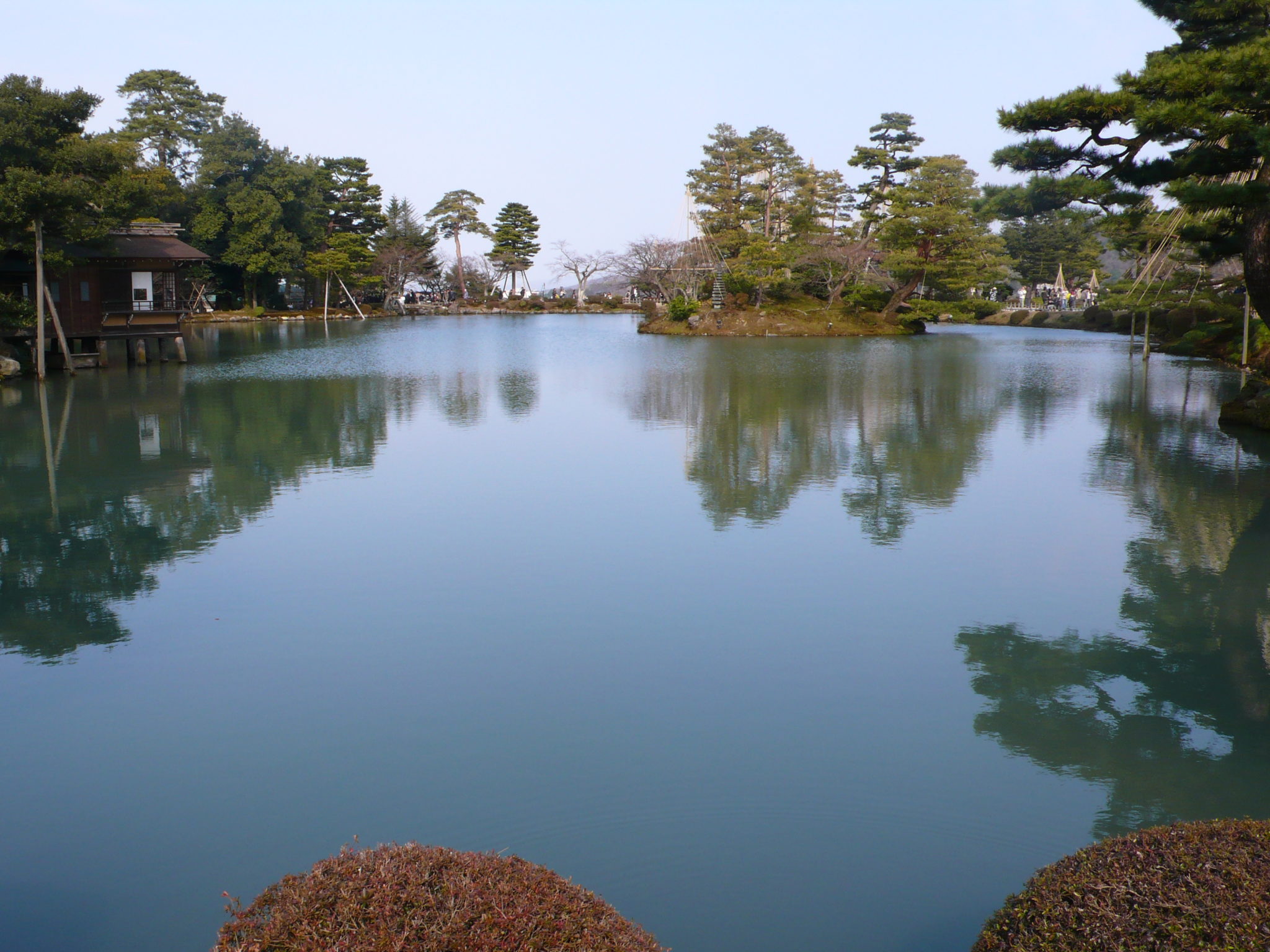
Speak of a tourist visit to Japan, and inevitably people will ask about places like Tokyo (for mine, the most amazing city in the world), Kyoto (gorgeous, worth as much time as you can afford to spend there) or Hiroshima (haven’t been, but there’s definitely more to it than its nuclear scars). Perhaps Kobe (great beef, and the earthquake museum is a must-see), Osaka (boringly industrial), Sapporo (cold) or Nara (doe, a deer, LOTS of deer). But some of the best places to visit in Japan are a little away from the usual sights. One such is Kanazawa, the highlight of my own time in Japan.
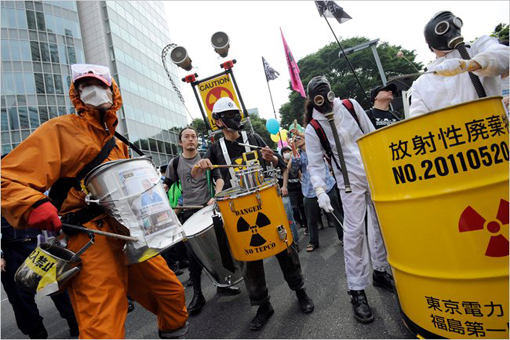
On the three-month anniversary of the March 11 earthquake in Japan, protesters around the country took to the streets to protest nuclear power after the true scale of the nuclear disaster and details of gross mismanagement of the Fukushima Daiichi power plant by the Japanese government and TEPCO came to light. Rally organizers in Tokyo say about 20,000 people participated in the demonstration. Continue reading →
Hello darlings. What’s that? You’ve missed me? Oh: You haven’t missed me. And you want me to get with the putting out for you, starting here and now. Okay, sure. I love it when you get all macho on me. And just look at that bitch Bacall, sitting there seething with jealousy. Continue reading →
AP has an excellent article up detailing the incestuous relationship between Tokyo Electric Power Company (TEPCO) and the government regulators that were supposed to be keeping a watchful eye on the industry.
First things first: Nuclear Power is a tricky issue. I don’t expect to solve it in a short article and some snarky comments. Nonetheless, it’s one of the key issues confronting countries around the world as their existing power stations age and (in many cases) as their demands for energy grow, especially in developing countries like China and India.
Second things second: It’s important to look at this issue (like any issue) logically and not with emotional knee-jerk reactions.
What I mean is this. If I show you this picture:
and ask whether cats are cuddly and cute or vicious killers who must be controlled, you’ll at least be conflicted.
If I show you THIS picture:
and ask whether cats are cuddly and cute or vicious killers who must be controlled, I know your answer.
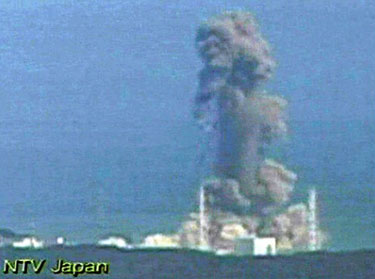
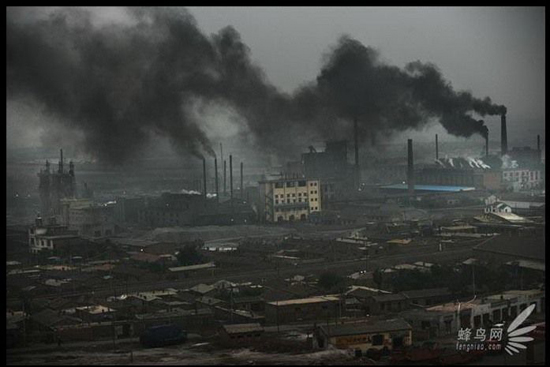
If I ask you what you think of nuclear power after you’ve just seen this:
well…..
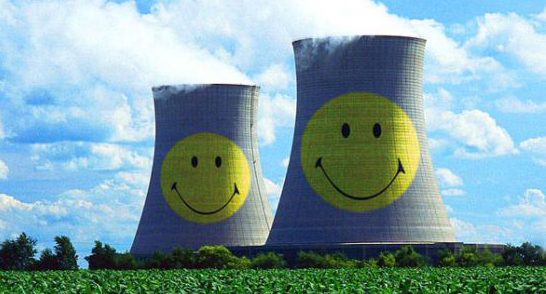
But what if I showed you
and asked you whether you want a few hundred more of these going up around the world in the next decade, or whether you would prefer some power stations which don’t use coal or oil or gas and which don’t emit greenhouse gases?
For further amusing and scary information on the way this kind of emotional manipulation can be used in surveys, I highly recommend this classic Yes Minister clip:
Moving on:
What are the advantages of nuclear power? Well, that’s easy, we’ve cited some of them above:
1. No greenhouse gas emissions, or other noxious substances which contribute to acid rain, smog and other air pollutant.
2. Doesn’t use traditional fossil fuels and we don’t seem to be in danger of running out of uranium any time soon.
3. Already commercially viable and practical, and indeed very efficient, for use on the scale of providing power to millions of homes and businesses.
1 & 2 are the advantages over traditional fossil fuel power stations. 3 is the advantage over renewable energy sources apart from hydro power. Naturally, if we could just rely on solar power and wind power for all our energy needs, we would do it. It can’t be done yet. For now, it’s a 2 horse race. Perhaps we’re talking a stop-gap measure for only 5-10 years, maybe we won’t have renewal energy on a practical scale until vicious war halves the population. But every year, more power stations must go up around the world to meet demand, and we’ve got to decide what we want them to be NOW, not in 10 years (or after Thunderdome).
What then are the disadvantages?
1. If a nuclear plant goes bad, it will contaminate the surrounding land beyond habitability forever (until cleaned up, if it can be cleaned up, which will take decades).
2. If a nuclear plant goes bad, it may release radioactive particles into the wind and water which spread far beyond the immediate area, making the health damage more than just a localized issue.
3. Nuclear energy may not produce air pollutants, but it does create noxious waste of another kind which must be stuck somewhere. The more nuclear energy used, the more waste produced and the more secure faraway places we must find to stash the radioactive waste.
4. Risk of uranium fuel sales being diverted into weapons manufacture, or at “best” a “dirty bomb”.
To counter this, one could say: these are all manageable risks. If you don’t mess up running your nuclear plant (and hundreds of such plants around the world, for decades, have run without melting down), 1 & 2 don’t matter. if you can successfully store and partially recycle your radioactive waste (which, so far, has been managed by all nuclear countries), 3 doesn’t matter. If you keep proper security, 4 doesn’t matter. The problems with fossil fuels, on the other hand, cannot be stopped. Fossil fuels will run out, and when you burn them they release tons of air pollutants.
The trouble with that argument is of course, that ignoring Chernobyl, partial meltdowns and major leaks have occurred in the United States, the United Kingdom and now Japan. Few countries are not subject to major earthquakes or floods or other disasters which can affect the safe operation of plants despite all the safety precautions. And now we’re talking about rolling more of the things out in an era of lowest-price-wins construction tendering, in developing countries who haven’t had 30 years of experience to iron out the teething problems, in countries where a $10,000 bribe to divert some uranium isn’t chickenfeed but instead enough money to set a family up for life.
My personal belief is that most if not all nuclear power accidents have occurred with old technology (even the Fukushima reactor at the center of the present crisis is a very old one built to lower safety precautions than are now in use, and which was already overdue to be decommissioned). Countries can safely use nuclear power as a stopgap for renewable energy, and must do so to buy time to get greenhouse gas emissions down, but they should heed the lessons of Fukushima about doing anything on the cheap or taking anything for granted, and if wealthier countries need to chip in a bit to ensure others do it properly and don’t leave nuclear power plants to be built by the President’s brother-in-law and staffed by men paid $1 a day, then they should realise it’s in their own collective self-interest, less a fallout cloud sweep across their borders.
But on the other side, I can see how this will only create a permanent and huge hoard of nuclear waste, to be stored effectively forever, a long-term problem to be managed long after greenhouse gases have been brought under control, and that my idealistic dream of countries acting responsibly in this day and age is overly optimistic, and that fossil fuel power plants are a necessary way of playing it safe, the lesser evil to avoid the catastrophe of nuclear meltdowns.
Or maybe we should just accept global warming is inevitable and plan for how to survive that, not how to shuffle deckchairs on the beach while the tide is rising?
Your thoughts, upon reaching the end of this lengthy post, would be appreciated.
And this is World Roundup with Mark Shields’ Jowls. I’d like to apologize right off the bat for being a bit late with this post. Mark switched up his denture cream, and the smell in here, sweet living Christ the smell… Anyway, his doctor says it’s for the best or whatever but the fact remains: Fixodent finds a way to make an 81-year-old man’s mouth smell worse than it does in its normal state. And that’s gotta count as some kind of accomplishment, probably. Right jowl, I need a breather… Continue reading →
In just over a week, a group of professional and citizen journalists collaborated via Twitter to source, edit and publish a book of first-person accounts of the March 11th earthquake and tsunami in Japan. The goal: to sell the book and donate all monies to the Japanese Red Cross earthquake and tsunami relief efforts.
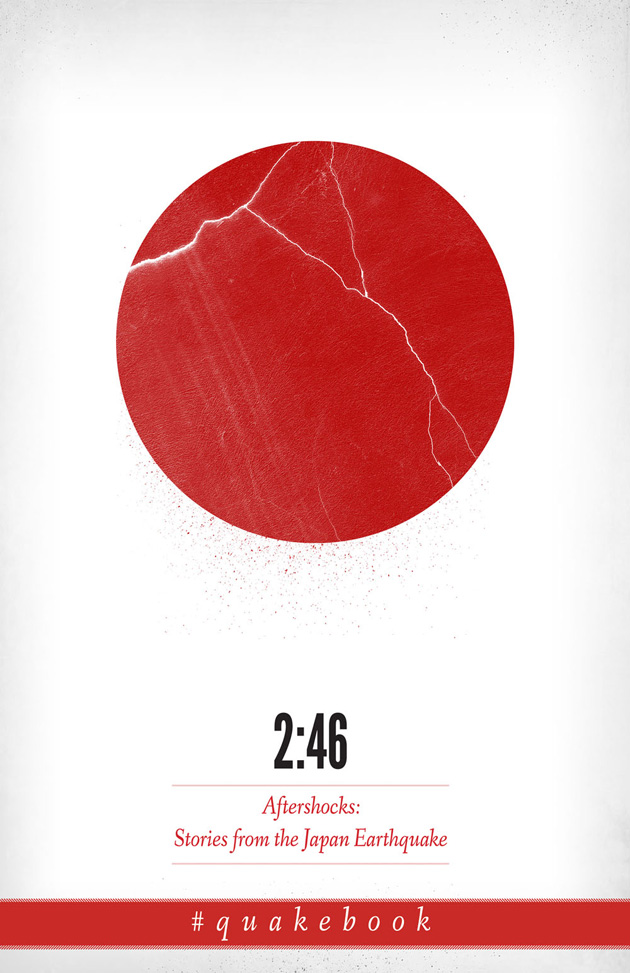
A former British journalist residing in Japan who blogs under the pseudonym Our Man in Abiko (check it out – he’s a very funny fellow) wanted to do something for the hundreds of thousands of people that have been affected by this event, from those directly in the earthquake zone, the path of the tsunami, in the evacuation area around the nuclear power plant in Fukushima, to those in many other areas of Japan, whose lives have been disrupted by rolling power blackouts, poor road conditions, food and water supply difficulties, and more. Our Man thought up 2:46: Aftershocks: Stories from the Japan Earthquake, and spread word on Twitter via the hashtag #quakebook. He gathered stories from around the country about people’s experiences of people in the thick of the disaster and its aftermath.
Contributions to the book—essays, artwork and photographs—poured in from writers, artists, and photographers all over Japan, as well as elsewhere in Asia and North America and Europe. In addition to narratives by the journalists and people who braved the disaster, the book contains writing created specifically for 2:46 by authors William Gibson, Barry Eisler, Jake Adelstein and artist/musician Yoko Ono.
“The primary goal,” Our Man in Abiko says, “is to raise awareness, and in doing so raise money to donate to the Japanese Red Cross Society to help the thousands of homeless, hungry and cold survivors of the earthquake and tsunami.” The collection reflects the fear and confusion caused by Japan’s unprecedented disaster. “But #quakebook isn’t all gloom and doom. By the time you finish reading it, you’ll have a sense of hope, and even optimism.”
2:46 is now available as a Kindle ebook here. (The Kindle app is free for use on your computer,iPhone, Droid.) Amazon has graciously agreed to waive their standard ebook fees, so 100% of the $9.99 purchase price of 2:46 will go directly to the JRC. Digital versions for other ebook readers and hardbound editions are currently in the works. The book is currently being translated into Japanese, Spanish, Portuguese, Greek, German and French-language versions.
Please support the Japan Red Cross and buy a copy today. For updates and press coverage of the book, please visit the Quakebook blog, the official Twitter account, or join the Facebook group.
And this is World Roundup with Mark Shields’ Jowls.
Your correspondents and veteran opinion-haver Mark Shields.
As jowls go, we’ve seen a lot. We’ve been there and back again. We’ve forgotten more stories than most of today’s firm-cheeked young “journalists” have followed on Twitter. We’ve jowled with jowliest of the jowls from the limpest Liebermans to the meatiest McCains—we’ve literally gone jowl-to-jowl with every established, occasionally centrist, and often infuriatingly inconsistent politician in this town, and we know you and David Brooks wouldn’t have it any other way. With our bona fides established, Left Jowl begins our Roundup in North Africa. Continue reading →
As Japan races against time to get its Fukushima nuclear reactor under control, questions are being raised about quality of leadership in this time of crisis. As of this writing, the alert level of the reactor has been raised to 5 point (out of 7, on par with the Three-Mile Island incident), there are about 15,000 people dead or missing and another 440,000 people in evacuation centers. From the regions north to those surrounding Tokyo, residents are trying to go about their lives while worrying about their relatives, fearing dire radiation poisoning, trying to find non-existent food in stores, hastily planned rolling blackouts that have been implemented by the government to save energy, limited train service, limited bank service, no fuel for heat and transport, and an ever-present fear of aftershocks. Cities located further out like Osaka, Kobe, and beyond are trying to deal with a sudden influx of people trying to escape the areas deemed affected by the radiation
Prime Minister Naoto Kan
Clearly, this is a time when people are looking to strong leadership to help them find strength and hope. Prime Minister Naoto Kan doesn’t seem to be that person. Up until this earthquake, popular opinion of Kan was in the 20-percentile range and it looked likely that he was going to resign despite statements to the contrary. Kan came into power by a historical defeat in 2009 of the conservative Liberal Democratic Party (LDP) by the Democratic Party (DPJ) to take the leadership. There were high expectations and the defeat was in answer to the recent economic crash. Up until then, the LDP had controlled the government for 54 years with the exception of a short time in 1993. The defeat was momentous.
When the earthquake struck, Kan quickly sent troops into the worst affected areas and shut down reactors that posed a risk. However throughout this crisis, the general public sentiment, and indeed, that of the world has been that Nagata-chou has not been forthcoming with critical information regarding nuclear safety. For starters, there has been a striking lack of frequent, direct communications from the Prime Minister, allowing the Chief Cabinet Secretary Yukio Edano to be the face of the government. He has been the link for people who are grieving and has grown so popular (and thus reinforcing the unpopularity of Kan) that there has been concern on the part of the public that he has been “too much” the face of the crisis. Twitter channels have popped up with hashtags such as #Edano_nero (Edano, go to sleep) and #Kan_okiro (Kan_wake up). Part of the reason for the huge connection he has stirred within people is because he has not been the standard politician, favoring instead to speak directly and not with a script. Kan has yet to go to the affected area, saying that he is considering going next week, almost two weeks after the tragedy.
But despite that, are they giving enough information? One of the main reasons being considered is that there is a possibility that the government has been withholding information because it has not wanted to induce mass panic. The average Japanese in Tokyo has now been required to go back to work and is trying to resume life as usual. However, countries like the US, France, Hong Kong, and Germany have been sending in charter flights for people wishing to go to Osaka or leave the country entirely. When the head of the Nuclear Regulatory Commissions, Gregory Jaczko commented on the danger level due to the lack of water in the cooling pools of the number 3 and 4 reactors, Edano, avoided comment. According to the New York Times on March 17th,
Japanese officials did not flatly deny Mr. Jaczko’s comments but hedged. Asked about the level of water in the No. 4 reactor, Yoshitaka Nagayama, a spokesman for Japan’s Nuclear and Industrial Safety Agency, said: “Because we have been unable to go to the scene, we cannot confirm whether there is water left or not in the spent fuel pool at Reactor No. 4.
The technical nature of the issue perhaps compounded the Japanese news media’s tendency to shield the government. Reporters who cover agencies and ministries are organized in press clubs that have cozy ties with officials and decide what to report — and what not to. The lack of attention received by Mr. Jaczko’s comments was consistent in the news media.
The position of the government is that they’ve been honestly conveying information despite an admission that they might’ve gotten it out more effectively earlier on. Kan had blown up at Tokyo Electric Power (TEPCO), the plant’s operator for not providing sufficient information.
In all, the government reaction has been seen as a crisis in lack of forethought and mismanagement. While, the double hit of earthquake and tsunami might have seemed impossible, it is baffling that no one had the forethought to make a causal connection and make plans accordingly. Hopefully, the government will use this as a wakeup call and step up to become one that the people want so desperately to believe in.