In an “haha, we were just kidding moment” Netflix has reversed its decision to separate the DVD rental service from its online streaming service. Continue reading
In an “haha, we were just kidding moment” Netflix has reversed its decision to separate the DVD rental service from its online streaming service. Continue reading
 This morning, In Cupertino, Apple CEO Tim Cook unveiled the new iPhone 4s. Not 4Gs, because the previous iPhone wasn’t the iPhone 4G. It was the iPhone 4. 4G is a cellular data network. The reason the 3G was named thusly was because it was able to take advantage of AT&T’s 3G network. If anyone starts calling it the 4Gs in the comments, I will firebomb this motherfucker.
Now. Because I had to sit through like 75 minutes of crap to get to the one thing everyone wanted, I’ve decided that I’m not going to suffer alone. I’m going to go over EVERYTHING they talked about.
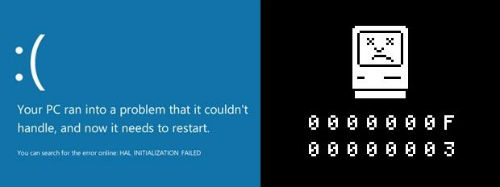 Hidey ho there, computer adventurers! If you’ve been using personal computers for a while, you have probably laid eyes on a Macintosh or two. You may even own one. If you were an early adopter of the Mac, or have used pushed a Mac just a little too far past its breaking point, you have probably seen the “Sad Mac” icon pictured above right. Continue reading
 In a recent blog post Netflix CEO Reed Hastings has copped to the mistake of increasing the price of a Netflix membership by as much as 60%.
“I messed up. I owe everyone an explanation,” he says in the post. Though he admits he handled the annoucement of the price change wrong, he says he would not change it.
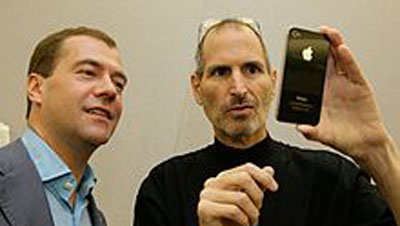
Steve Jobs has submitted his resignation as CEO of Apple this afternoon. His letter reads:
Products and strategies fail sometimes, but rarely so quickly. Tech giant Hewlett Packard has, withing 6 weeks of launching the TouchPad tablet, not only ceased sale of the tablet but announced it is withdrawing from the tablet game completely and that it is ceasing to develop webOS tablets and phones – the very things which were meant to have been the reason it acquired Palm Inc for $1.2b just over a year ago. That’s a very expensive mistake. Continue reading
Free. Legal. On Demand.
Remember a long, long time ago when if you wanted a song from a band or singer you had to buy the whole album? Then Napster came along and you didn’t have to. Well, legally anyways. (Even though I know you’re all upstanding citizens and would never consider illegally downloading music.) Then iTunes came out and you didn’t have to buy the whole album if you didn’t want to, but you had to buy the single before being able to listen to the whole thing. And then Pandora came out and you could tell it what you liked and it would play similar music, but you couldn’t tell it what song you wanted to listen to, you just had to hope that it got played while you were listening to a station? Continue reading
Eli Pariser makes a great case for why the Internet, as we know it today, is not the information free-for all that we all believe it to be. Editors, the gatekeepers of the past, have been replaced by algorithms that have been designed to tailor Google search results and Facebook News Feeds to your tastes and interests, while leaving out ideas that are uncomfortable but important. Great video from TED2011. Comment.
Kotaku recently published an Owen Good editorial in response to a recent study conducted by the GAMBIT gaming research center at MIT that explored the legendary capacity of anonymous gamers to utilize hate speech in play and on internet forums.
At first I thought the article’s title – “Is This Studying Hate Speech, Or Just Intellectualized Trolling” – might have been one of Gawker Media’s signature pageview-grabbing titles, but upon reading the text I found several things that I felt compelled to address. Normally I’d just leave a comment, but their system seems to be on the fritz again, and besides, I feel as though my thoughts on this are numerous enough to compile a full retort, blog-style, and this is as good of a place to provide that as any.
I should preface all of this by providing my “credentials”. I am in what is often considered the core demographic of the gaming industry – a white, nerdy male in his mid-20’s pursuing undergraduate degree. I have loved video games (particularly those of the role-playing variety) for as long as I can remember. My favorite game is the original Fallout (for some wizened veterans of the gaming community, that might serve as a dog whistle warning), which I received for Christmas as an 11-year old in 1997.
I think a lot about games, about their design, about what makes them fun and their potential for real brilliance. But I have some beef with gamers and the gaming industry – I’m skeptical of the notion of games as legitimate art and I find myself at odds with the culture in general and its activist strains in particular. So it’s no small wonder that I get my hackles up over pieces of gaming journalism such as this one.
The GAMBIT study involved creating and registering gamer profiles with the names PROUD_2B_MUSLIM, GayPride90 and Black_N_Proud90, and playing Halo: Reach online with random players (for those who don’t know, the use of hate speech in gaming is usually associated with the proliferation of console multi-player gaming via the original Halo). As you can probably guess, the players using those names suffered much verbal abuse directed towards the identities their names indicated they had. Not only that, in player vs. player combat those with the minority-identified names were more aggressively targeted.
Good’s analysis of this study is, to my mind at least, indicative of the ossified privilege that is endemic to gaming as an industry explicitly designed to serve the sensibilities of disgruntled white teenage boys. Good looks at the hate speech and aggressive play and concludes that the minority-identified players brought the abuse upon themselves. Good writes – “If you’re looking to be called the usual filth-flarn-flarn-filth-flarn, those are some awesome gamertags, well worth the 800 Microsoft Points change fees.”
Good’s insinuation, as per his title, is that GAMBIT is involved in “intellectualized trolling” here, but his use of the term “trolling” is both disingenuous and fundamentally incorrect. Trolling, as those who have spent even a small amount of time on internet message boards will tell you, is a sort of forum sport in which a member posts something for the sole purpose of causing arguments and strife within the topic or thread. By definition, trolling is provocation – it is done solely to elicit emotion and negative response.
Thus, what Good is really implying is that being a Muslim, or black, or a woman, or a gay person, and being open about that fact to others, is an open provocation in the gay community, that being a minority player is something that you inflict on other people. There’s no real scandal in being called a nigger or a fag or a cunt in a game, or being singled out for aggression based on your identity – it wouldn’t have happened had you kept it to yourself. The onus is on the abused to prevent abuse. This is, obviously, a repugnant view to hold to, but it’s one that seems to be held as widely agreeable within the gaming community.
It’s not just relegated to multi-player games, either. In recent months, gay panic in single-player RPG gaming has hit an all-time high. When Fallout: New Vegas came out there were a surprising number of people who were shocked, shocked to discover that a perk called “Confirmed Bachelor” unlocked in-game flirting with same-sex characters. As the game’s lead designer noted, players would only experience a majority of these encounters if they deliberately indicated that their character was interested in the same sex, via the perk choice. But this didn’t really address what I suspect is the core concern of the horrified gamers – that gay characters were visible in-game at all.

Dragon Age 2 is another game that features a degree of sexual diversity within its game-world, and in the weeks since it came out there has been some fan uproar over “neglecting straight male gamers”. From a poster on the Bioware Social Forums, one of the skeeviest corners of the internet –
“every previous BioWare game, I always felt that almost every companion in the game was designed for the male gamer in mind. Every female love interest was always written as a male friend type support character. In Dragon Age 2, I felt like most of the companions were designed to appeal to other groups foremost, Anders and Fenris for gays and Aveline for women given the lack of strong women in games, and that for the straight male gamer, a secondary concern.
It makes things very awkward when your male companions keep making passes at you. The fact that a “No Homosexuality” option, which could have been easily implemented, is omitted just proves my point. I know there are some straight male gamers out there who did not mind it at and I respect that.
When I say BioWare neglected The Straight Male Gamer, I don’t mean that they ignored male gamers. The romance options, Isabella and Merrill, were clearly designed for the straight male gamers in mind. Unfortunately, those choices are what one would call “exotic” choices. They appeal to a subset of male gamers and while its true you can’t make a romance option everyone will love, with Isabella and Merrill it seems like they weren’t even going for an option most males will like. And the fact is, they could have. They had the resources to add another romance option, but instead chose to implement a gay romance with Anders.”
This sort of complaint actually first started cropping up when the first Dragon Age game, which had a bisexual male character that the player could “romance”*. The character, Zevran, was widely disliked, and there were anecdotal reports of players killing the character at the first opportunity so that they never had to deal with him. There were also complaints about being pigeonholed into gay romances, but as in the case of New Vegas and Dragon Age 2 (which also received the same complaints), gay romances actually had to be entered into deliberately and could be stopped at any time (except for New Vegas, which had no romances at all).
It seems as though the very existence of gay characters (who just come out and say they are gay and act as gay without the player’s permission!) is fundamentally threatening to many gamers, in a sad sort of reflection of grade-school level homophobia (is there any other kind?), like homosexuality is some flesh-eating virus that you can’t even acknowledge for fear of infection. It’s as sad as it is revolting.
And all that’s just the tip of the iceberg. The problems faced by female gamers are as old as multi-player gaming – ask a woman who plays World of Warcraft what she plays as, and chances are good she’ll be a male character so that she can move through the game without people assuming (correctly) that she’s a woman and acting according to game standards.
As for race, well, going back to Dragon Age 2, the third most popular fan-made modification for the game in its unofficial mod database is a reskin mod for Isabela, a dark-skinned romanceable character, that gives her fair skin, blonde hair, and blue eyes. All told it’s been downloaded about 13,000 times as of this writing.
In his closing line, Good asks what the point of even talking about all of this is. “…if this kind of behavior is already known and largely assumed to be the norm,” he asks, “what is the application of this information?”
My reply is this: As represented by Kotaku and countless other gaming blogs out there, gamers have a pretty massive chip on their collective shoulder. They feel unfairly maligned, scrutinized, and persecuted. They feel stereotyped and disparaged (ironic, that). They hate being dismissed as ignorant, piggish college boys with no taste or intellectual merit, they feel like what they love is an art form, legitimate and worthy of respect. They want to be taken seriously.
The only way that the gaming community will ever receive respect (or be worthy of it, even) is by taking responsibility for itself, and that includes the ugly elements within the community. This sort of harassment and bigotry has no place in any other collective passion, why should it be accepted in gaming? The odd fatalism on display in Good’s editorial (“this kind of behavior is already known and largely assumed to be the norm”) is a tacit admission that a) Racism / Homophobia / Misogyny are acceptable as they are in gaming culture and b) there is nothing to be done about them. If these things are not worth paying attention to, how can they be worth addressing?
I think that taking ownership of these things is something that is actually possible, but given that a bigotry-supporting, victim-blaming opinion piece such as this one can be received with fanfare from one of the most prominent advocates of gaming culture on the internet, chances aren’t good. I honestly doubt the community is willing to commit. My only real hope is that diversity in games will be continue to grow, and that anxiety over it will abate. But that’s a slim hope. In the meantime, I’ve gone back to not reading Kotaku.
*And before you get the impression that Bioware is some vitally progressive company, they’ve refused to include queer male characters in their Mass Effect series, citing their “inappropriate for PG-13″ nature”, although female player characters can romance an alien character that is, by all signifiers, culturally and physically, a woman. The alien race is mono-sexed, so it’s not really a lesbian relationship, you see. They have ruled out exclusively gay characters in their games (all non-straight characters are bisexual) citing a lack of market incentive. Progress!
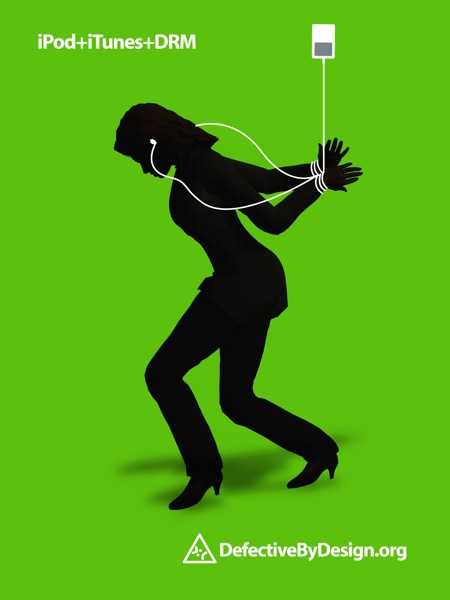 Tomorrow Apple is going to announce some BS about iTunes, probably streaming and probably the Beatles catalog. No matter what they say just remember that Apple doesn’t care about music they care about money.
Streaming audio services have a history of living for a short time and then leaving their users in the lurch. Apple is a big company but they can choose to exit the business at any time if it’s not making money.
The moral of the story is to own your music and have it free of digital rights management. Rip it from a CD you own, buy it from Amazon MP3 store or even from Apple’s DRM-free tracks on iTunes. The catch being that the Beatles probably won’t be available DRM-free. I’m not saying to do anything illegal, just don’t get caught in the DRM trap. Buy music, pay artists, but be free to listen to your music how you want, on the device you want at the time you want.