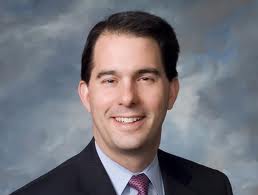
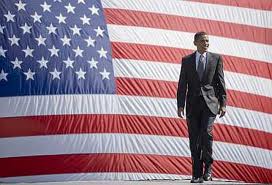
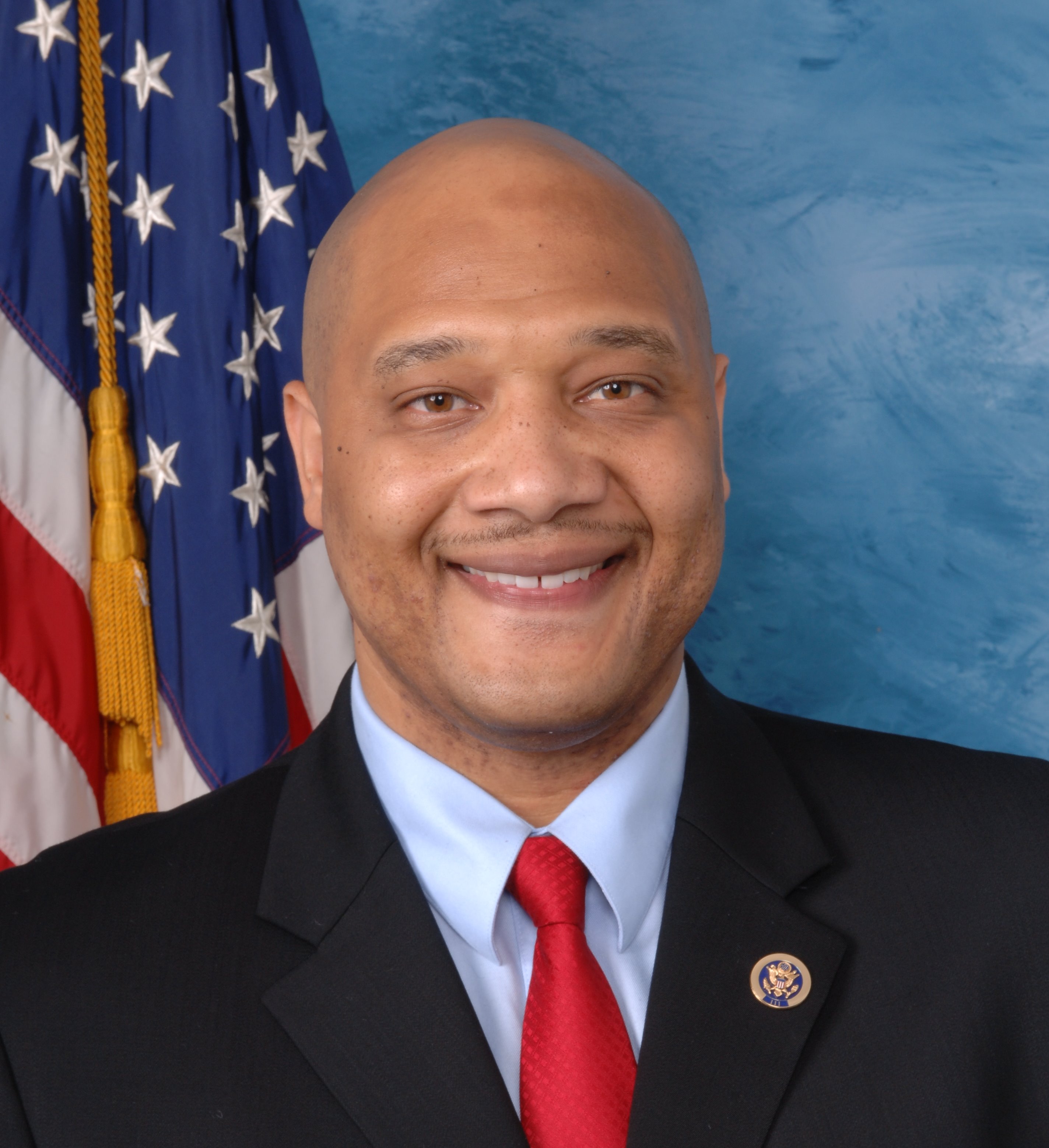
Congressman Carson represents Indiana’s 7th Congressional District; he was elected to the U.S. House of Representatives in early 2008 as part of a special election, voted in to his first full term in Congress in November of 2008, and was reelected again in 2010. Before his career as an elected official, Carson devoted himself to law enforcement and protecting Hoosiers across the state. He first served as a Local Board Investigative Officer for the Indiana State Excise Police for nine years covering 22 counties before being detailed to the Indiana Department of Homeland Security’s Intelligence Fusion Center in 2006 where he worked in an anti-terrorism unit to protect Indiana and the United States from terrorist threats at home and abroad.
Congressman André Carson graciously shared the following perspectives with us:
Representative King claims that American Muslims and Muslims in general do not speak out against Islamic extremism. Do you agree with this statement?
Since 9/11, seven out of the last ten Al-Qaeda plots threatening the U.S. were prevented by Muslim cooperation. L.A. County Sheriff Lee Baca testified he was overwhelmed by the number of Muslims who were ready to assist him in response to his outreach. That is just one of many examples, and the call into question whether Representative King is ill-informed.
Until Representative King has reviewed the statements of thousands of American Muslim organizations nationwide who have denounced every act of violence perpetrated by a person who claims to be Muslim, any generalization he makes regarding whether Muslims do enough to “speak out” against extremism is selectively anecdotal, outcome-driven, and patently unfair.
He also stated that the hearings are aimed at protecting Muslims from being pressured to commit terrorist acts. Do you have concerns about these hearings and do you think that they will accomplish what Rep. King claims?
I fear these hearings will exacerbate suspicion of Muslims in our country. Simply by making Muslims the sole focal point and phrasing the inquiry in terms of whether Muslims “cooperate enough,” Chairman King invites non-Muslims to put all of their American Muslim neighbors under a microscope.
There are extremists who pervert Islam to serve violent ends, and they must be deterred, but violence caused by ideological extremism is a threat in all its forms, regardless of the religion or ideology in which it is rooted. Unfortunately, for too many Americans, terrorism has a Muslim face, and I believe it is causing many, including Chairman King, to ignore other homegrown threats. We should never ignore or downplay ANY form of violent extremism. But we also should not be focusing our attention on a single form of extremism while so many others continue to put the American people at risk.
How do you think that the Muslim American community should respond to these hearings?
The Muslim community is broad and diverse with no single organization speaking for all Muslims. But we need to make our voices heard and show we are proud and an important part of America. Muslims Americans are doctors, lawyers, teachers, scientists, and police officers. Muslims want their families to be safe, just like every other American.
What kind of impact does rhetoric like King’s have on the Muslim community as a whole? Is it ignored or directly addressed in community outreach initiatives?
It is dispiriting. To peace-loving, patriotic American Muslims, it serves as a reminder that no matter how many millions fully embrace our country, and no matter how deep their civic commitment, the acts of a misguided handful who pervert the faith creates a tragic guilt-by-association mentality at the highest levels of government. Cooperation of the Muslim community around the world will play a critical role in our effort to prevent future attacks. But this cooperation will never be possible if we further alienate and disparage the Muslim community in our own country.
As a country with constitutionally protected religious freedom, we risk extremism in every religion. Is this liberty worth the risk?
Absolutely. The very first words of our very first amendment give all Americans the right to practice our faith without government persecution. By targeting American Muslims, these hearings run contrary to centuries of upholding religious freedom in the U.S. and further contradicts the proud American history many Muslim families can trace back for generations. This hearing would be just as wrong if they were focusing on any other religious group. It hearkens back to the era of Senator Joseph McCarthy, when similar witch hunts pitted neighbor against neighbor while failing to improve our national security and distracting Americans from more pressing issues confronting the nation.
As a former law enforcement officer, how important is it to factor racial or religious components into an investigation? Does profiling based on these factors make us more or less safe from terrorism?
During my time in law enforcement, I worked with informants and cooperating witnesses from all backgrounds on a wide variety of cases, and one reality held true: those who trusted law enforcement, the judicial system, and the government provided more useful information in a timely manner than those who felt singled out or targeted. Security is based on trust. When leadership does not have the trust of a community, regardless of religion or race, it’s extremely difficult to maintain security.
Governor Scott Walker has finally admitted that busting the Wisconsin public employee’s unions has nothing to do with the fiscal health of the state.
Can somebody give this guy the "Santorum" treatment on Urban Dictionary?
Wisconsin only requires a quorum to pass fiscally-related bills. So Gov. Walker has split his union busting bill in two and the Wisconsin senate Republicans are getting ready to pass the union busting bill without the senate Democrats.
I’m afraid the Democrats may not win this one. It is almost impossible to win when you are dealing with people who have no concept of shame or honor.
UPDATE 7:50pm: Bill passed 18-1 in the Senate. Now it moves to the State Assembly. In addition to forbidding collective bargaining for the public unions, the bill also includes requirements for state employees to contribute 5% of their income to their pensions, 12% to their health care. It also requires school district and municipal employees to contribute 5% to their pensions.
A 17% hit to the paychecks of thousands of people doesn’t sound non-fiscal to me.
Today, Crasstalk is thrilled to present a conversation with Indiana Democratic Representative Terri Austin (IN-37). Rep. Austin was one of two Democratic legislators who remained at the Statehouse to object to any legislative business occurring without a quorum. A leading voice in education, mass transit and transportation, Rep. Austin has spent the last two weeks traveling back and forth from the Indiana Statehouse to Urbana, Illinois, where the remaining Democratic caucus members have been since the standoff began.
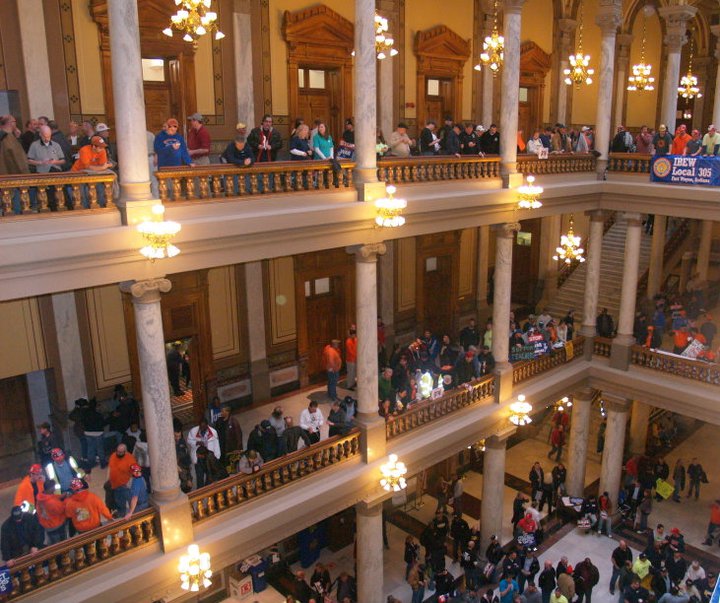
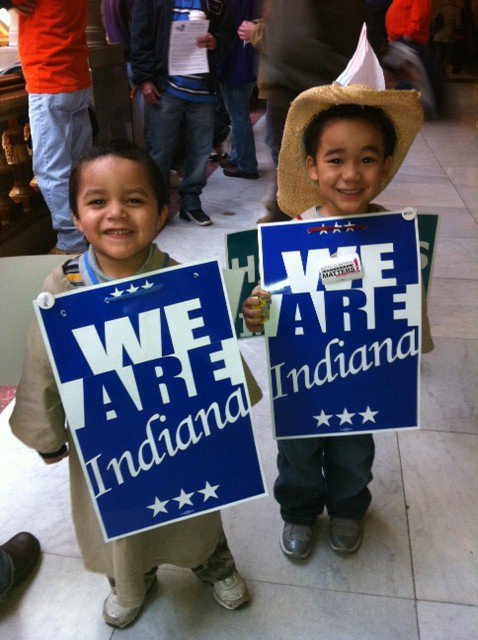
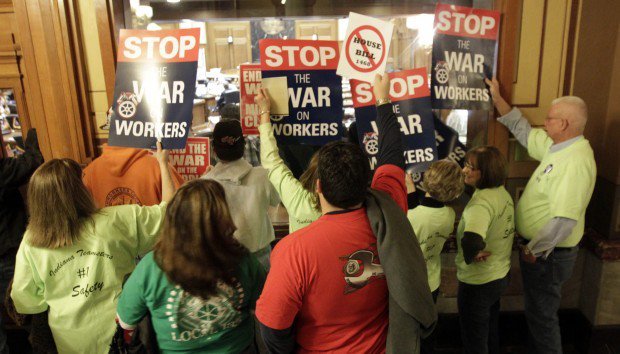
As they enter their third week of boycotting the Indiana House of Representatives, Indiana Democratic legislators are facing enormous pressure from all sides. On one side, there are calls for them to come to the Legislature and go back to work. On the other, countless Hoosier workers and teachers who have rallied day after day, numbering in the thousands each time, to show their support for the Democrats’ stand. What is happening in Indiana is different than what is occurring in Ohio and Wisconsin. However, there are also common themes threaded through each states’ stand off. For many, the events in Indiana and across the country represent no less than a battle for the future of the American working class. Are unions a thing of the past? Do public employees deserve collective bargaining? These are just a few of the questions raised by this situation.
On Tuesday, February 22, 2011, House Democrats used their constitutional obligation to prevent quorum on the House floor to stop a radical agenda that was a direct attack on working Hoosiers and our public schools. We left for Illinois to give the thousands of Hoosier workers, teachers, and families a real voice at the State House. Our decision was to send a message to Republicans that we were serious about our concerns. Some say we should come back and do our job. We believe that fighting on behalf of thousands of Hoosier students, workers, and families is our job. To sit in the chamber and simply vote no was not enough.
Source: Indiana State Legislature
Before focusing on the substance of why Democratic legislators left the state, I want to ask you about the tactic of walking out or boycotting the legislature. Some have suggested that this is not an appropriate way for a minority party to block legislation. How do you respond to this criticism?
Rep. Austin:
I have great respect for our legislative institution and its rules. The tactic of quorum-busting—causing a quorum to be prevented from meeting—has been used in legislative bodies by minorities seeking to block the adoption of some measure they oppose. Quorum-busting has been used for centuries. For instance, during his time in the state legislature, Abraham Lincoln, leapt out of a first story window (the doors of the Capitol had been locked to prevent legislators from fleeing) in a failed attempt to prevent a quorum from being present.
To remain out of the House chamber should be used rarely and done only after careful consideration. We know that Speaker Bosma and other House Republicans understand this, because when in the minority, they used this Constitutionally-granted ability in 2001 and 2004.
Both Republican and Democratic members have participated in walkouts that have stopped legislative action. However, in the recent past, members have not left the state. Why did the Democrats feel they needed to leave the state?
Rep. Austin:
The decision to leave the state was made after careful deliberation. There was significant concern that the Speaker of the House or the Governor would use the powers of arrest to compel attendance. The only way to ensure that this would not happen was to relocate to a region where the powers of arrest were not recognized. It also gave us uninterrupted time to review, discuss and debate the various pieces of legislation we were concerned about and to develop proposed amendments to the bills. We believe that the legislature works best when a spirit of bipartisanship and compromise is present.
Indiana House members initially left the state to stop Right to Work legislation from passing. Why is the Democratic Caucus opposed to RtW?
Rep. Austin:
The decision to break a quorum was not just about Right To Work. Over the last couple of weeks the barrage of controversial and critical bills, put on the calendar at the last minute, hampered the ability of legislators and the public to understand the details of these bills much less consider their long-term consequences. Let me give you an example of what I mean.
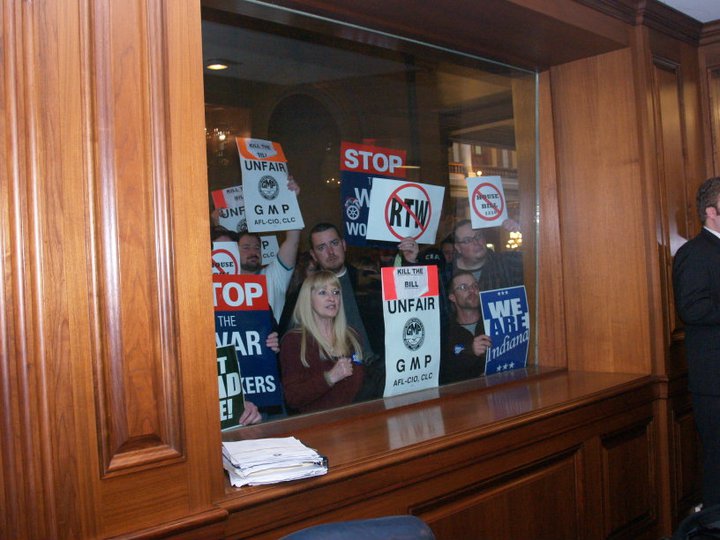
The RTW bill was scheduled on the very last morning for committee hearings. The hearing was held in less than ideal conditions. There were hundreds of people who traveled to the statehouse to testify regarding the bill. Many could not even hear the testimony because the hearing room only held about 50 people. Others were forced to stand outside in the hallway or throughout the building. 92 people who signed up to testify were not given an opportunity to testify.
It is important to note that there was conflicting testimony on the positive impact of RtW legislation in other states. Dr. Gordon Lafer, an Associate Professor at the University of Oregon indicated that all of the most recent scientific studies show that RTW has zero impact on job growth. In fact, only one state, Oklahoma, has adopted Right To Work over the past 25 years. One problem with basing public policy decisions on what happened in 1970 and 1980 is that we live in a fundamentally different economy today.
Something this important should not be determined in a 90 minute committee hearing where Hoosiers were denied an opportunity to hear the testimony or offer their thoughts and opinions as citizens.
I think you can see from this example and news reports of the session that legislators and the public were not fully educated on several bills that were moving like a runaway freight train. Although the “Right to Work” (RTW) bill has been depicted as the primary reason for the “time out”, it was a whole list of concerns. This time out has given the public and legislators the time to learn about the content of these bills. As can be noted by the thousands of citizens who have demonstrated at the statehouse and rallied in their communities, the public is becoming more aware of these issues, and they are speaking up. The focus of this time-out should not be the absence of the House members but the potentially damaging impact of these bills.
Almost immediately after the Democrats left, Republican leaders pledged not to advance the RTW legislation. But, the Democrats did not come back. Why?
Indiana State Democrats
Rep. Austin:
As explained above, there were other pieces of legislation that would have had a drastic impact on Hoosier families and children attending public schools. Democrats’ decision to remain out of the statehouse allows time for the bills to be fully examined, amendments developed, the public to be informed and their voices to be heard. The Democrats have consistently expressed a desire to work in a spirit of compromise and negotiation. Efforts to do just that have been rebuked and refused by the House leadership. Republicans have said there is no negotiating, their agenda will pass. Their rhetoric and unwillingness to compromise have forced us to fight from Illinois – our only means left to defend the jobs of working people in Indiana and the education of Hoosier children.
This session began with a great hope of working with our colleagues across the aisle to develop a plan for job creation, move our public schools to the front of the class and draft a fiscally responsible state budget. Speaker Bosma started this session saying it was a “new day” in the House chamber, and he was going to seek a new level of bi-partisanship. Unfortunately, we’ve seen the complete opposite. This session has seen only 29 percent of the votes be cast in a bipartisan manner. Normally, 80-90 percent of the votes in a session are bipartisan.
Please understand that House Democrats did not cross our arms and say “no” to everything that was proposed by our Republican colleagues. Even if we disagreed on a bill, positive and compromising alternatives were offered to improve and/or moderate the consequences if we felt they were harmful to our districts and our constituents. Most times those ideas, offered in good faith, were summarily dismissed Our kids’ education and our families’ wages shouldn’t be the victim of partisanship. Hoosier families deserve better than that.
Source: Indiana House Democrats Fighting for Families
Do Democrats have a list of specific bills that they want to negotiate on before agreeing to come back? If so, can you briefly explain what they are?
Rep. Austin:
There is no list of “demands” as has been suggested. However, several bills impacting public education and the future of the middle class in Indiana are of great concern. HB 1003 creates a voucher program that sends public tax dollars to private schools for a select number of children. HB 1479 allows for the immediate state takeover of 212 schools and gives the State Board of Education the authority to appoint a for-profit management company to run the school. Other legislation impacts individuals’ rights to voluntarily have association dues or fees paid from their paycheck. Others greatly restrict employees’ ability to work with management regarding areas of mutual concern. Many of the bills will drive down Hoosier wages and benefits. Hoosiers already earn only 85 cents on the dollar as compared to the U.S. average. The Republican proposals have been proven in other states to lower wages by $5,500 a year on average.
These are just some of the bills that many legislators feel will be harmful to their communities.
Are the Democrats asking for specific legislative changes to be agreed to before you will come back or are you asking for an opportunity through open debate and proposed amendments to change them once you do come back?
Rep. Austin:
The Democrats are willing to work with everyone in a spirit of compromise. Negotiations are never successful when one party or the other draws a line in the sand. It is important to keep the lines of communication open and for both parties to come to the table with respect and a willingness to listen.
The Crasstalk community includes people from all 50 states. It seems that the same legislation Indiana Democrats are objecting to is also being proposed in other states, notably Wisconsin and Ohio. Are Democratic legislators talking across states and coming up with a larger strategy to counteract what seems to be a nationwide Republican effort?
Rep. Austin:
I am not aware that talks with other Democratic legislators are going on to develop a strategy. I do know that the communications that have taken place are more about supporting each other’s efforts and comparing different pieces of legislation across state lines.
Are you personally concerned about any political fallout from the Democrats’ boycott? Why or why not?
Source: Indiana House Democrats Fighting for Families
Rep. Austin:
At some point, you have to stand up for what you believe in, regardless of the consequences. I was elected by the people of the district to try and make their lives better and to be their voice in state government. Many of the pieces of legislation would not have a positive impact on the families and children that I represent. I believe that Hoosier families are worth fighting for.
Last question. Many people who will read this are not Hoosiers and may have never been to Indiana. As an elected representative of Hoosier residents, what is the one thing you would most like them to know about Indiana?
Rep. Austin:
It’s a wonderful place to grow up and to work. Yes, we face some challenges but also we have many positives that make us attractive to young people, families and entrepreneurs. I had the opportunity to travel to Taiwan and Japan several years ago as a part of a state delegation. When we met with business leaders who talked about why they brought their companies to Indiana, they indicated two things that set us apart: our Hoosier work ethic and the excellent education their children received. Unfortunately, some leaders forget to tell people the things they are doing well before they tell them why we need to do things differently.
In an interview with the BBC out yesterday, the former half-term Governor of Alaska, failed Vice Presidential Candidate and mother of the most embarrassing Dancing With The Stars contestant ever, remarked that the rumor that she did not know Africa was a continent (and not a country) was a fabrication by “jerk” staffers.
Next, she’ll be suing Tina Fey for impersonating her during the infamous Katie Couric interview.
Sarah, wouldn’t it be simpler to just read a book once in a while?
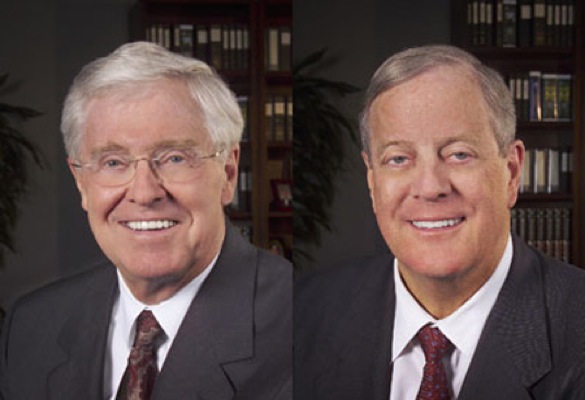
Man! Those Koch Brothers infect everything Republicans touch!
Wart #1 and Wart #2
Speaker Boehner recently replaced Nancy Pelosi’s “Green the Capital” program that transitioned the congressional food services into using only biodegradable food and drink containers in the congressional eateries.
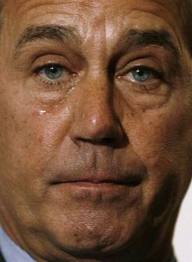
Science makes him sad.
What did he replace the biodegradable materials with? Expandable polystyrene foam. A.K.A. Styrofoam. You know, that stuff never, ever, ever biodegrades. Ever.
Who is supplying Congress with their coffee cups and to-go boxes that will be poisoning landfills long after human stupidity has resulted in our ejection from this planet?
WinCup, a company owned by former Koch Industries executive George
Koch Industries, the cancer causing wart that continues to taint the Republican agenda.
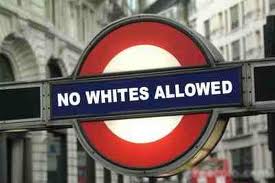
So apparently white people ain’t foolin’ around no more. White people be pissed off and they don’t care whether the facts support their rage or how straight up stupid, evil and nineteenth century they sound when they open their mouths. Shit’s gettin’ real out there in the suburbs ya’ll. The Ford Explorers are gassed up and the sequined American flag sweatshirts are ON. White America is in revolt. They are standing up for their God-given right to be the HBsIC and brown and black people better get out da way…NOW.
The near future...as delusional people see it.
Recently, CNN posted a story that released some startling data about that rare and vulnerable animal: The American White Person.
Apparently 44% of American White People think they face racial animus that is just as or more severe of a problem as the animus faced by black people or other minorities. 56% of white Republicans and 61% white Tea Partiers share that opinion. Colleges are beginning to offer “Whiteness Studies” courses (because all those European and American history and literature courses really gave white people the short shrift) and there is a rise in scholarships exclusively offered to that rarest of college students: the White Male. Prominent white activists are even leading marches on Washington to reclaim their right to own everything, live where ever they want, be the standard of beauty and be the only flesh color crayon in the crayon box. Times are tough and the movement is on the streets!
Things White People Are Scared Of
This trauma is something that brown and black people could never understand. We’ve never been in power, so we can’t imagine what it must be like to see black people taking our jobs ( Yeah Mr. President, that means you), stealing our women (Taye Diggs couldn’t you find a sista to rub your gorgeousness on?) and men (Heidi Klum, bitch don’t pretend I’m not looking at you). Not to mention that brown and black people have the temerity to reproduce at a rate that is kicking white people’s birth control using ass (my great grandma had thirteen kids and all their kids have all been prolific breeders- pretty sure we could double the population of Wyoming if we so chose. Watch out Wyoming! ).
So, given all that, I’m pretty sure what I’m about to say should get me registered with the Southern Poverty Law Center for committing a hate crime against a vulnerable minority group.
Oh well, let the Haterade fall!
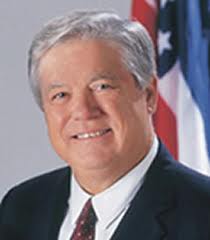
In the last couple months, the Governor of Mississippi Haley Barbour, has been fighting the good fight for White America. He’s belittled the trauma of the civil rights movements and defended “citizens councils” in the South. It shows how committed white people are to this movement that this guy is STILL in the running for the Republican nomination for President. I’ll say this about White America, they do a good job of promoting from within. And let’s be honest, he deserves that promotion. I know Nazi comparisons are persona non grata but in all seriousness the White Citizens Councils of the South were the closest this country has ever come to the S.S. and it was really, really close. They killed, raped and pillaged the black community with impunity and did a masterful job covering it all up for decades. But, according to Barbour, they were the “good” guys in the civil rights movement. Ok, and my ass isn’t a work of art that I carved with thousands of lunges and carb deprivation.
Not to be out done Governor Paul LePage of Maine (whose picture you will see if you look up Good Ol’ Boy in the dictionary) informed the local chapter of the NAACP that they should “kiss his butt,” for having the temerity to question his decision to blow off Martin Luther King Jr. day celebrations. Sounds like this guy is channeling the supernatural to distinguish himself from the pack of average, ho hum, white racist dudes. Perhaps he was channeling the late, infamous Governor Faubus of Arkansas? The WHITE frosting on top of this WHITE cupcake? The man also thinks that women growing beards (not to mention tumors) as a result of exposure to BPAs is also no big thang.
I believe that for every ten actual racists, there are two people who are just too dumb or mentally imbalanced to understand the meaning behind the adjectives, nouns and verbs they string together in front of a microphone. GLoM may just be one of those individuals.
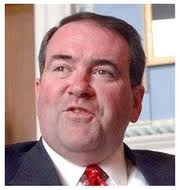
Moving right along, on the Stupid Things Governor and Former Governors Say Express, we have another southerner acting the fool. Former Governor Mike Huckabee (who lately is giving Governor Christie of New Jersey a run for his lunch money for the illustrious title of Governor Sandwiches) decided that President Obama, who was raised in Kansas and Hawaii, was influenced by madrassas as a child. Because there were so many schools that teach a “fundamental” extremist interpretation of Islam in Kansas and Hawaii in the sixties and seventies. Of course, because the President’s absentee father happened to be from a mostly Muslim country and the President has a name other than George, Bill, or James he MUST have been influenced by a world view that this country did not even regard as a threat until the man was an adult and employed by the state of Illinois.
President George W. Bush spent a lot more time hanging out in the Middle East and entertaining Middle Eastern visitors than President Obama and yet no one has a word to say about his influences. Possibly because most of us recognize that the man is too damn dumb to be capable of absorbing information from sources that don’t come with illustrations.
But I digress.
My last little example to support my reasons for building a bunker and starting my own little Black Panthers chapter, is the fine state of Texas (isn’t it always Texas?). I may look black on the streets, but I’m a Mexican in the kitchen (and you know, genetically) and as a Mexican I want to fly down to that state and smack state Rep. Debbie Riddle upside her, “let’s find a convenient loop hole around the thirteenth amendment so I can keep my gardener and maid, treat them like shit and possibly not pay them” head. Rep. Riddle would like to criminalize the hiring of illegal immigrants, punishable with jail time, UNLESS those immigrants are employed as household staff. Immigration debate aside (and trust, that issue is chock full of plenty of awful all by itself), this would (once again in the Eternal Return of the Same that perfectly encapsulates the current state of American political discourse) create an underclass of brown people who are open to exploitation, abuse and whatever special hell lurks around the corner for people who are completely dependent upon employers for their financial, social and legal welfare.
The things Americans are proud of...
Despite the incredible disconnects from reality that make each of these incidents individually, darkly hilarious, this trend is actually a fairly terrifying. If you study ethnic conflicts, the first step to conflict (and by “conflict” I mean wholesale slaughter and imprisonment of minority groups) is the dominate racial or ethnic group starting and sustaining a victim narrative that they use as impetus to pass laws that protect their privileges at the expense of the basic rights of minority groups. We’ve seen this in New York, where mostly white people sought to deny Muslim people their right to have a community center in order to protect their privilege to not have to be confronted with people practicing a religion that they find somehow distasteful.
Chris Rock tells a story about moving into his wealthy suburb in New Jersey. There are only four black people who own homes in his neighborhood, Mary J. Blige, Jay-Z, Eddie Murphy and Rock himself. Two of the best stand-up comics in the game today, one of the greatest R&B singers ever and a hip hop mogul. Who is Rock’s next door neighbor? A white dentist. Rock’s point? “Black people (and all non-white people) have to fly to get someplace that white people can walk to.”
It is troubling that, in 2011, 44% of White Americans either can’t or don’t see this.
Our wonderful colleague Salome Valentine, hot on the heels of this week’s ruling in Snyder v. Phelps (holding WBC’s picketing of a military funeral to be Constitutionally-protected speech), highlighted an earlier decision by this Court dealing with a similar issue. As correctly noted by her, in US v. Stevens, the Supreme Court struck down a 1999 law that outlawed “crush videos” – despicable videos that show the torment and death of animals whereby a (typically small) animal is crushed by a woman, done for the sexual (masturbatory) gratification. I do not understand this fetish. Few do and it appears to fall so far outside the bounds of ordinary human decency – and even depravity – that few are willing to discuss it in depth or at length.
Nevertheless, the Supreme Court struck down a law that outlawed these videos, seeming to put the imprimatur of permissibility out conduct that falls well beyond the pale. This is not true. In fact, what Chief Justice John Roberts’ opinions in both Stevens and Snyder show is a deep abiding devotion to the letter and spirit of the First Amendment. This devotion is apparent in the plain-spoken and highly accessible manner in which Justice Roberts wrote his opinions.
I have excerpted the notable and relevant portions of Roberts’ opinions. Once you read them, I hope you will see that, at least when it comes to the First Amendment, John Roberts is a needed bulwark against the likes of Samuel Alito. Where you see quotes, that is Justice Roberts citing to a prior case. I have omitted the cited case names and citations for brevity’s sake because Justice Roberts does, in fact, hew close to prior rulings:
Whether the First Amendment prohibits holding Westboro liable for its speech in this case turns largely on whether that speech is of public or private concern, as determined by all the circumstances of the case. “[S]peech on ‘matters of public concern’ . . . is ‘at the heart of the First Amendment’s protection.’” The First Amendment reflects “a profound national commitment to the principle that debate on public issues should be uninhibited, robust, and wide-open.” That is because “speech concerning public affairs is more than self-expression; it is the essence of self-government.” Accordingly, “speech on public issues occupies the highest rung of the hierarchy of First Amendment values, and is entitled to special protection.”
The “content” of Westboro’s signs plainly relates to broad issues of interest to society at large, rather than matters of “purely private concern.” While these messages may fall short of refined social or political commentary, the issues they highlight—the political and moral conduct of the United States and its citizens, the fate of our Nation, homosexuality in the military, and scandals involving the Catholic clergy—are matters of public import. The signs certainly convey Westboro’s position on those issues, in a manner designed… to reach as broad a public audience as possible. And even if a few of the signs—such as “You’re Going to Hell” and “God Hates You”—were viewed as containing messages related to Matthew Snyder or the Snyders specifically, that would not change the fact that the overall thrust and dominant theme of Westboro’s demonstration spoke to broader public issues.
Westboro had been actively engaged in speaking on the subjects addressed in its picketing long before it became aware of Matthew Snyder, and there can be no serious claim that Westboro’s picketing did not represent its “honestly believed” views on public issues. There was no preexisting relationship or conflict between Westboro and Snyder that might suggest Westboro’s speech on public matters was intended to mask an attack on Snyder over a private matter.
Westboro conducted its picketing peacefully on matters of public concern at a public place adjacent to a public street. Such space occupies a “special position in terms of First Amendment protection.” “[W]e have repeatedly referred to public streets as the archetype of a traditional public forum,” noting that “ ‘[t]ime out of mind’ public streets and sidewalks have been used for public assembly and debate.”
That said, “[e]ven protected speech is not equally permissible in all places and at all times.” Westboro’s choice of where and when to conduct its picketing is not beyond the Government’s regulatory reach—it is “subject to reasonable time, place, or manner restrictions” that are consistent with the standards announced in this Court’s precedents.
Maryland’s law, however, was not in effect at the time of the events at issue here, so we have no occasion to consider how it might apply to facts such as those before us, or whether it or other similar regulations are constitutional.
Simply put, the church members had the right to be where they were. Westboro alerted local authorities to its funeral protest and fully complied with police guidance on where the picketing could be staged. The picketing was conducted under police supervision some 1,000 feet from the church, out of the sight of those at the church. The protest was not unruly; there was no shouting, profanity, or violence.
The record confirms that any distress occasioned by Westboro’s picketing turned on the content and viewpointof the message conveyed, rather than any interference with the funeral itself. A group of parishioners standing at the very spot where Westboro stood, holding signs that said “God Bless America” and “God Loves You,” would not have been subjected to liability. It was what Westboro said that exposed it to tort damages.
Given that Westboro’s speech was at a public place on a matter of public concern, that speech is entitled to “special protection” under the First Amendment. Such speech cannot be restricted simply because it is upsetting or arouses contempt. “If there is a bedrock principle underlying the First Amendment, it is that the government may not prohibit the expression of an idea simply because society finds the idea itself offensive or disagreeable.” Indeed, “the point of all speech protection is to shield just those choices of content that in someone’s eyes are misguided, or even hurtful.”
“in public debate [we] must tolerate insulting, and even outrageous, speech in order to provide adequate ‘breathing space’ to the freedoms protected by the First Amendment.”
What Westboro said, in the whole context of how and where it chose to say it, is entitled to “special protection” under the First Amendment, and that protection cannot be overcome by a jury finding that the picketing was outrageous. For all these reasons, the jury verdict imposing tort liability on Westboro for intentional infliction of emotional distress must be set aside.
In most circumstances, “the Constitution does not permit the government to decide which types of otherwise protected speech are sufficiently offensive to require protection for the unwilling listener or viewer. Rather, . . . the burden normally falls upon the viewer to avoid further bombardment of [his] sensibilities simply by averting [his] eyes.”
As a general matter, we have applied the captive audience doctrine only sparingly to protect unwilling listeners from protected speech. For example, we have upheld a statute allowing a homeowner to restrict the delivery of offensive mail to his home and an ordinance prohibiting picketing “before or about” any individual’s residence.
Here, Westboro stayed well away from the memorial service. Snyder could see no more than the tops of the signs when driving to the funeral. And there is no indication that the picketing in any way interfered with the funeral service itself. We decline to expand the captive audience doctrine to the circumstances presented here. Because we find that the First Amendment bars Snyder from recovery for intentional infliction of emotional distress or intrusion upon seclusion—the alleged unlawful activity Westboro conspired to accomplish—we must likewise hold that Snyder cannot recover for civil conspiracy based on those torts.
Our holding today is narrow.
Westboro believes that America is morally flawed; many Americans might feel the same about Westboro. Westboro’s funeral picketing is certainly hurtful and its contribution to public discourse may be negligible. But Westboro addressed matters of public import on public property, in a peaceful manner, in full compliance with the guidance of local officials. The speech was indeed planned to coincide with Matthew Snyder’s funeral, but did not itself disrupt that funeral, and Westboro’s choice to conduct its picketing at that time and place did not alter the nature of its speech.
Speech is powerful. It can stir people to action, move them to tears of both joy and sorrow, and—as it did here—inflict great pain. On the facts before us, we cannot react to that pain by punishing the speaker. As a Nation we have chosen a different course—to protect even hurtful speech on public issues to ensure that we do not stifle public debate. That choice requires that we shield Westboro from tort liability for its picketing in this case.
From US v. Stevens:
“From 1791 to the present,” however, the First Amendment has “permitted restrictions upon the content of speech in a few limited areas,” and has never “include[d] a freedom to disregard these traditional limitations.” These “historic and traditional categories long familiar to the bar,” – including obscenity, defamation, fraud, incitement, and speech integral to criminal conduct —are “well-defined and narrowly limited classes of speech, the prevention and punishment of which have never been thought to raise any Constitutional problem.
The Government argues that “depictions of animal cruelty” should be added to the list. It contends that depictions of “illegal acts of animal cruelty” that are “made, sold, or possessed for commercial gain” necessarily “lack expressive value,” and may accordingly “be regulated as unprotected speech.” The claim is not just that Congress may regulate depictions of animal cruelty subject to the First Amendment, but that these depictions are outside the reach of that Amendment altogether— that they fall into a “`First Amendment Free Zone.'”
As the Government notes, the prohibition of animal cruelty itself has a long history in American law, starting with the early settlement of the Colonies. Reply Brief 12, n. 8; see, e.g., The Body of Liberties § 92 (Mass. Bay Colony 1641) (“No man shall exercise any Tirany or Cruelty towards any bruit Creature which are usually kept for man’s use“). But we are unaware of any similar tradition excluding depictions of animal cruelty from “the freedom of speech” codified in the First Amendment, and the Government points us to none.
Instead, the Government points to Congress’s “`legislative judgment that . . . depictions of animals being intentionally tortured and killed [are] of such minimal redeeming value as to render [them] unworthy of First Amendment protection,'” and asks the Court to uphold the ban on the same basis. The Government thus proposes that a claim of categorical exclusion should be considered under a simple balancing test: “Whether a given category of speech enjoys First Amendment protection depends upon a categorical balancing of the value of the speech against its societal costs.”
As a free-floating test for First Amendment coverage, that sentence is startling and dangerous. The First Amendment’s guarantee of free speech does not extend only to categories of speech that survive an ad hoc balancing of relative social costs and benefits. The First Amendment itself reflects a judgment by the American people that the benefits of its restrictions on the Government outweigh the costs. Our Constitution forecloses any attempt to revise that judgment simply on the basis that some speech is not worth it. The Constitution is not a document “prescribing limits, and declaring that those limits may be passed at pleasure.” Marbury v. Madison, 1 Cranch 137, 178, 2 L.Ed. 60 (1803).
We read § 48 to create a criminal prohibition of alarming breadth. To begin with, the text of the statute’s ban on a “depiction of animal cruelty” nowhere requires that the depicted conduct be cruel. That text applies to “any . . . depiction” in which “a living animal is intentionally maimed, mutilated, tortured, wounded, or killed.” § 48(c)(1). “[M]aimed, mutilated, [and] tortured” convey cruelty, but “wounded” or “killed” do not suggest any such limitation.
The only thing standing between defendants who sell such depictions and five years in federal prison—other than the mercy of a prosecutor—is the statute’s exceptions clause. Subsection (b) exempts from prohibition “any depiction that has serious religious, political, scientific, educational, journalistic, historical, or artistic value.” The Government argues that this clause substantially narrows the statute’s reach: News reports about animal cruelty have “journalistic” value; pictures of bullfights in Spain have “historical” value; and instructional hunting videos have “educational” value.
Quite apart from the requirement of “serious” value in § 48(b), the excepted speech must also fall within one of the enumerated categories. Much speech does not. Most hunting videos, for example, are not obviously instructional in nature, except in the sense that all life is a lesson. According to Safari Club International and the Congressional Sportsmen’s Foundation, many popular videos “have primarily entertainment value” and are designed to “entertai[n] the viewer, marke[t] hunting equipment, or increas[e] the hunting community.” The Government offers no principled explanation why these depictions of hunting or depictions of Spanish bullfights would be inherently valuable while those of Japanese dogfights are not. The dissent contends that hunting depictions must have serious value because hunting has serious value, in a way that dogfights presumably do not. Post, at ___-___. But § 48(b) addresses the value of the depictions, not of the underlying activity. There is simply no adequate reading of the exceptions clause that results in the statute’s banning only the depictions the Government would like to ban.
This prosecution is itself evidence of the danger in putting faith in government representations of prosecutorial restraint. When this legislation was enacted, the Executive Branch announced that it would interpret § 48 as covering only depictions “of wanton cruelty to animals designed to appeal to a prurient interest in sex.” See Statement by President William J. Clinton upon Signing H.R. 1887, 34 Weekly Comp. Pres. Doc. 2557 (Dec. 9, 1999). No one suggests that the videos in this case fit that description. The Government’s assurance that it will apply § 48 far more restrictively than its language provides is pertinent only as an implicit acknowledgment of the potential constitutional problems with a more natural reading.
Again, in Stevens, Justice Alito was the lone dissent.
Does the Supreme Court love or even approve of animal cruelty or the needless infliction of emotional anguish on a grieving parent? Not one jot. What Justice Stevens’ opinion show is compassion and desire for a moral society in America that is governed equally before the law.
Please read these opinions if you get a chance. They are written in plain English and speak volumes to just how valuable the First Amendment is. I find myself revisiting my prejudices towards Justice Roberts, based on him being appointed by President George W. Bush. In reading these two cases, I am glad to see that someone of his intellect is, in fact, safeguarding the First Amendment.
So yesterday we played an insane little game called Find Today’s Worst Politico Article Ever. And the Crasstalk Army rose to the challenge. You risked turning into David Broder-esque Beltway Zombies and actually spent time looking for the crappiest pieces of Politico crap that ever got crapped out.
Here’s the worst of the worst (remember, this is just one day’s worth of Politicrap):
Essentially, this is a 4 paragraph article mentioning when the book is coming out, followed by a short blurb by a publisher. In fact everything in this article is probably going to be found on the inside sleeve of the book.
Except the conclusion of the article, of course, which states: “On Tuesday morning, Bristol posted on her Facebook fan page for the first time since December.”
But there could be only one winner on this day, and that goes to Epuff, for nominating this thing. Amazingly, Politico figured out how to connect Charlie Sheen, Mike Huckabee and Chris Matthews into a fine bouillabaisse of SEO linkbait crappiness:
Two and a Half Mean: Huck says Matthews like Sheen
The awful play on the words. The use of a colon. The rhyming. As Charles Barkley would say, “that’s just turrrrible.” The rest of the article just repeats a few dumb soundbites that Huckabee made right before eating his fifth Hardee’s burger of the afternoon and fucking his cousin. Of course, Politico doesn’t actually ever take sides. They just repeat what the pundits say. See, journalism is easy when you’re as even-handed as Politico is! And if you can throw Charlie Sheen into the mix, go for it!
So congratulations to Epuff on winning our first-ever Politico contest. Here’s a little something I wrote in her honor. I think it really capture’s Epuff’s essence.
And yet we had no ideal Mistress stretching her form up to the clouds, nor yet a cruel Queen to whom to offer our corpses twisted into the shape of Byzantine rings! No reason to die unless it is the desire to be rid of the too great weight of our courage!
We drove on, crushing beneath our burning wheels, like shirt-collars under the iron, the watch dogs on the steps of the houses.
Death, tamed, went in front of me at each corner offering me his hand nicely, and sometimes lay on the ground with a noise of creaking jaws giving me velvet glances from the bottom of puddles.
“Let us leave good sense behind like a hideous husk and let us hurl ourselves, like fruit spiced with pride, into the immense mouth and breast of the world! Let us feed the unknown, not from despair, but simply to enrich the unfathomable reservoirs of the Absurd!”
As soon as I had said these words, I turned sharply back on my tracks with the mad intoxication of puppies biting their tails, and suddenly there were two cyclists disapproving of me and tottering in front of me like two persuasive but contradictory reasons. Their stupid swaying got in my way. What a bore! Pouah! I stopped short, and in disgust hurled myself — vlan! — head over heels in a ditch.
Oh, maternal ditch, half full of muddy water! A factory gutter! I savored a mouthful of strengthening muck which recalled the black teat of my Sudanese nurse!
As I raised my body, mud-spattered and smelly, I felt the red hot poker of joy deliciously pierce my heart. A crowd of fishermen and gouty naturalists crowded terrified around this marvel. With patient and tentative care they raised high enormous grappling irons to fish up my car, like a vast shark that had run aground. It rose slowly leaving in the ditch, like scales, its heavy coachwork of good sense and its upholstery of comfort.
We thought it was dead, my good shark, but I woke it with a single caress of its powerful back, and it was revived running as fast as it could on its fins.
Then with my face covered in good factory mud, covered with metal scratches, useless sweat and celestial grime, amidst the complaint of staid fishermen and angry naturalists, we dictated our first will and testament to all the living men on earth.
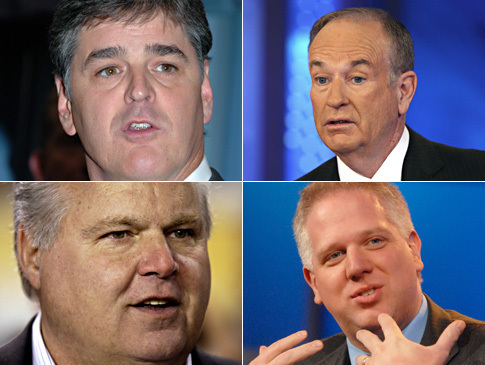
Taking the right wing’s common hypocrisy to mind-numbing new heights, three major conservative commentators – who have been harshly critical of the demonstrations in Wisconsin by union members – all belong to the American Federation of Television and Radio Artists union (AFTRA), which is the AFL-CIO affiliate for television and broadcast workers.
Rush Limbaugh, Sean Hannity and Bill O’Reilly have have all been outspoken in their lack of sympathy to the struggles of public employee unions in Wisconsin. A representative for Glenn Beck denies that he is a union member, although it’s puzzling as to how that may be, since he, Hannity and O’Reilly famously all work for the same news organization.
According to AlterNet.org, which posted the story on February 26, 2011:
On Feb. 18, Limbaugh said on his radio program, “We are either on the side of the Wisconsin protesters or we are on the side of our country.” Hannity has featured several guests critical of the union and its supporters, including Wisconsin Gov. Scott Walker, on his Fox News television and radio shows.
On the Feb. 18 edition of “The O’Reilly Factor,” O’Reilly stated, “Governments can’t afford to operate” because of “union wages and benefits.” But it turns out that opposing workers’ rights isn’t the only thing these blowhards have in common.
Two weeks in to the Libyan uprising events continue to unfold at breathtaking speed as opposition and Gaddafi forces engage in heated battles for control of the country. The initial opposition momentum that resulted in close to half of the country falling to opposition hands and threatening Gaddafi’s control of Tripoli has shown signs of receding as Gaddafi has successfully reinforced his control of Tripoli and now begun counter-attacks to reclaim opposition-held territories. Though opposition forces have claimed success in repulsing Gaddafi’s most recent counter-offensive, opposition forces are now debating requesting foreign intervention under a UN banner, specifically targeted air strikes against weapons compounds and military installations such as radar stations. Foreign military intervention of this type would be a major escalation of international involvement (to date limited to non-military measures by the UN Security Council, the European Union and the United States) and appears to have little support from Security Council and NATO nation state members.
Gaddafi’s brutal crackdown and the developing humanitarian crisis has led many to ask what, if anything, the international community could do. Are there other options available? The most often mentioned proposal is the imposition of a No Fly Zone (NFZ) over Libya. This article is not advocating for or against an NFZ. An NFZ may sound like a relatively simple solution and most people are probably familiar with the general concept (as it has been used before and during the Gulf Wars and in the Balkan conflicts), but there are serious concerns about a Libyan NFZ, for both the potential enforcing foreign nations and for the opposition movement within Libya.
Many serious international commentators have weighed in on a No Fly Zone, for and against. Each view deserves careful consideration and the point of this article is to provide readers with links to the varying arguments to spur debate and present a more fleshed out backdrop of the competing concerns and interests. Before we begin, however, a quick note on the actual mechanics of how an NFZ would come into being. An NFZ would have to be authorized by the UN Security Council under its Chapter VII Charter Mandate and could be enforced either by UN member states or the NATO military alliance. An NFZ is a military intervention, not a non-military measure. From a practical standpoint, Russia (a veto-holding Security Council permanent member) is currently ruling out a UN Security Council NFZ and the NATO Alliance members are similarly split on the issue. For more on this aspect, see here.
Arguments For a No Fly Zone
Britain Prime Minister David Cameron, House of Commons Address: Prime Minister Cameron has proposed taking the lead on coordinating a military no fly zone, saying “[w]e must not tolerate this regime using military force against its own people. In that context I have asked the Ministry of Defence and the Chief of the Defence Staff to work with our allies on plans for a military no-fly zone.”
Michael Rubin, American Enterprise Institute, USA Today: Mr. Rubin argues that American credibility is on the line and that we cannot stand by in the face of civilian “slaughter.” He suggests that “Obama should take action: First, he should order U.S. fighter jets based in Sicily and on Mediterranean aircraft carriers to enforce a no-fly zone over northern Libya. Not only would this prevent Libyan planes from again strafing civilians, but it would also enable safer evacuation of non-Libyans. If Gadhafi’s henchmen continue their slaughter, Obama might impose no-drive zones for military vehicles.”
David Cortright, University of Notre Dame’s Kroc Institute for International Peace Studies, NY Times Room for Debate Forum: Mr. Cortright argues for a multi-lateral no fly zone authorized by the UN, but endorsed by the Arab League and one that includes Arab governments such as Egypt and Morocco. He argues “[m]ore than 200 Arab organizations and intellectuals have urged Arab League support for a no-flight zone. Gaining the league’s support in this new era of more responsive politics in the region should be possible and must be a priority. This will make it easier to convince China and other hesitant Security Council members to approve U.N. authorization and will hasten Colonel Qaddafi’s downfall.”
Marc Lynch, Foreign Policy Magazine: Mr. Lynch argues that it is time for concrete actions against Gaddafi’s regime. “It is time for the United States, NATO, the United Nations and the Arab League to act forcefully to try to prevent the already bloody situation from degenerating into something much worse. By acting, I mean a response sufficiently forceful and direct to deter or prevent the Libyan regime from using its military resources to butcher its opponents. I have already seen reports that NATO has sternly warned Libya against further violence against its people. Making that credible could mean the declaration and enforcement of a no-fly zone over Libya, presumably by NATO, to prevent the use of military aircraft against the protestors.”
“There has been a sort-of coalescing around the idea that a No Fly Zone is useful way to intervene to stop the killing. I am not so sure. While it is true that some of the slaughter has been perpetrated by Libyan air force, air assets alone are not responsible for the killing. If Qaddafi and his inner circle are intent on violently suppressing this revolt, they will use their superior ground forces as well. A No Fly Zone is a humanitarian half measure. It would let the international community say that it is doing something, but there is very little a No Fly Zone can actually do to stop ongoing slaughter.”
Defense Secretary Gates, Admiral Mullen, General Mathis, Pentagon News Conference: Gen. Mathis points out that an NFZ would first require disabling Libya’s air defense system, a significant military exercise. Sec. Gates stated “there would be multiple consequences to military action, including to United States forces already at war in the region. “If we move additional assets, what are the consequences of that for Afghanistan, for the Persian Gulf?” and that “we also have to think about, frankly, the use of the U.S. military in another country in the Middle East.”
Edward Rees, Senior adviser to Peace Dividend Trust, The Atlantic: Mr. Rees argues “enforcing a no-fly zone (NFZ) over Libya is unlikely to do as much good as its backers hope, and could in fact backfire.” Mr. Rees highlights the practical effectiveness of an NFZ because of the size of Libya, the lack of nearby air bases from which to impose the NFZ (meaning it may have to be enforced from aircraft carriers), the risk of downing the wrong aircrafts and being drawn into a ground conflict.
Kori Schake,Hoover Institution, NY Times Room for Debate Forum: Ms. Schake presents four reasons why the US should not use military force, including the fact that “we have not had an ambassador in Libya for months, and we have evacuated our diplomats; we ought not overestimate how much we understand what is occurring in the country or the shape Libya’s rebellion will take.”
 Congressman Carson represents Indiana’s 7th Congressional District; he was elected to the U.S. House of Representatives in early 2008 as part of a special election, voted in to his first full term in Congress in November of 2008, and was reelected again in 2010. Before his career as an elected official, Carson devoted himself to law enforcement and protecting Hoosiers across the state. He first served as a Local Board Investigative Officer for the Indiana State Excise Police for nine years covering 22 counties before being detailed to the Indiana Department of Homeland Security’s Intelligence Fusion Center in 2006 where he worked in an anti-terrorism unit to protect Indiana and the United States from terrorist threats at home and abroad.