News

1889 posts

No One Here Gets Out Alive Part 2: DNR and Artificial Nutrition

In Part One of our series, we all accepted the inevitable and subsequently gave serious thought to who we would choose to make decisions for us were we unable to do so.   Nah.  I know we’re all still in denial.  That’s why I plan to keep nagging you all by talking about this with some frequency.  Today we will talk a bit about some of the actual decisions you need to make for yourself, and possibly for a loved one.  Because I would like to not overwhelm you with information and give you enough information, I will break this down a couple of issues at a time.  Today we will discuss the two biggies:  Do Not Resuscitate orders and artificial nutrition.

DNR stands for ‘Do Not Resuscitate’.  What this means is that if your heart stops beating and you stop breathing, your medical and nursing providers will not attempt CPR or any other means of restarting your heart or breathing.  When making this decision it is important to be realistic about the limits and success of CPR.  TV representations of CPR are very unrealistic, with survival rates over double that of real life.  Also, contrary to what you may see on TV, people don’t get up and walk around after being resuscitated.  They spend days, maybe weeks, in an Intensive Care Unit on ventilation and, if they survive long enough to be discharged, a rate that has been described as being close to zero,  there is often residual physical and cognitive damage and months of rehabilitation that follows.

CPR survival rates range wildly and are affected by how sick you were in the first place.  Generally speaking, 3-37% of people outside of a hospital who get CPR survive the initial resuscitation.  It’s 3-15% for in hospital attempts, reflecting the poor outcomes for people who are already sick or elderly.  Again, this is ‘survival’ of the resuscitation attempt only.  As an historical side note, it has been noted that CPR survival rates have gone down since its introduction because it is used so often on people who are not appropriate candidates (people too sick or of an advanced age to survive)

The best candidates for CPR are younger, generally healthy, victims of trauma or who have a sudden cardiac arrest caused by an arrhythmia.

If you are making this decision for an elderly family member, the simple, honest truth is that they will not survive the attempt.  And even if they do, they will never get out of the ICU.  That is the blunt and honest truth.  Even more ‘Dr. House’:  we will do nothing but crack their ribs into pieces and disrespect their death by attempting it.

DNI: Do not intubate.  This generally goes along with a DNR.  I have seem some orders that are DNI only which is utterly nonsensical as you will need to be intubated if you stop breathing and your heart stops.  Why do CPR with all its intendant risks if you’re not going to follow it up with respiratory support?

Artificial Nutrition:  Artificial nutrition most often takes the form of tube feedings.  This is a tube that is surgically inserted into your stomach or intestine and a liquid supplement is infused directly in.  There are several indications for this, and it is not necessarily an end of life procedure.  For example, Roger Ebert has a gastric tube as a result of his cancer and surgery.  Anyone who loses their ability to swallow is a candidate.  People with esophageal or gastric cancer or people who have neurological swallowing issues because of a stroke are just a couple of examples.  Most of these people live perfectly fine lives with a feeding tube.  However, if you are in a persistent vegetative state or end stage dementia or end stage neurological disease, it is a different kind of decision.  You will have to think about how you would feel having this is there was no hope of recovery or returning to your previous mental state.   Many people with dementia lose their appetite as well as the ability to coordinate their chewing and swallowing which puts them at risk for aspiration and pneumonia.  A feeding tube is often recommended in this situation.  A feeding tube will only provide nutrition.  It will not cure or reverse the natural processes that are occurring.  The same is true of IV hydration.  As people lose the ability to swallow, they become dehydrated and the kidneys and body shuts down.  Fluids may be administered, but will only delay the inevitable.

It is important to note that it is not ‘starving’ someone if artificial nutrition or hydration is declined.  Any pain at end of life would be managed aggressively and comfort and dignity are the paramount goals.  In addition, the dehydration that naturally occurs results in electrolyte imbalances that cloud pain and cognition and provide a natural pain killer and release of endorphins.

I think that’s enough for today, kids.  If you want some help thinking about these decisions, there is an excellent resource called 5 Wishes that helps you think through these end of life decisions.  In the next installment, I will discuss dialysis, Do Not Hospitalize orders and organ donation – and the exciting unveiling of my own advance directives – Spoiler Alert! – Don’t keep me alive.

The awesome story behind the thumbnail pic.

Yakuza Are People, Too – A Cautionary Tale

Journalism’s first obligation is to the truth. The second obligation is to protect the sources of sensitive information. True journalists will go to the mat for their sources. Judith Miller is one such journalist. Paul Branzberg was another.

Jake Adelstein is another in the long line of journalists doing their job no matter what the consequences are.

Mr. Adelstein was the first American to be hired by the Yomiuri Shimbun, Japan’s largest newspaper. He worked as a journalist on the police beat in Saitama and later in Tokyo covering organized crime for 12 years. He quit the newspaper and returned to the U.S. once threats were made against his safety by Tadamasa Goto, a powerful yakuza boss. Goto’s henchmen threatened Mr. Adelstein if he attempted to publish anything in regards to the suspicious conditions that allowed Goto to receive a liver transplant in the U.S. Later, after uncovering further details of a deal made with the FBI to allow Goto into the US, he ran the exposé in The Washington Post after Japanese publishers refused to print the piece. His book, Tokyo Vice, details the inner workings of the media and the symbiotic relationship of organized crime and the police force in Japan.

All this to say, the man knows of what he writes, which made him an obvious choice as consultant for a National Geographic documentary, Gangland Tokyo, about organized crime in Japan. As part of the consulting job, Mr. Adelstein states that helped arrange interviews, handled logistics, and did some of the interviews himself. He introduced the outsourced film team to his own sources and friends. He even went so far as to loan National Geographic footage of actual yakuza ceremonies, for their “dramatization” sequences.

However, National Geographic allegedly refused to allow Mr. Adelstein full access to the materials needed to verify the accuracy of the program. He has since resigned from his job as consultant and has returned his fees to National Geographic Television.

As he states on his website, Japan Subculture Research Center:

“For several months, I have repeatedly asked to have all the materials necessary to verify the “factual accuracy” of the program, as was the agreement. The reply from NGT was to insist that “factual accuracy” actually meant “general accuracy”, and that I was being difficult.”

National Geographic has had issues with objective, truthful reporting in the past. The company, of which News Corp. is a majority shareholder, has a history of manipulating images and creating sensationalistic stories through misinformation as reported in this lengthy exposé in The Huffington Post about National Geographic’s work about Africa and this damning report about the mistranslation of an important early Christian manuscript.

So perhaps it should come as no surprise that NatGeo’s use of outsourced film crews working as “parachute journalists“on the yakuza documentary would result in possible compromises of source safety for the sake of creating a fascinating narrative.

After viewing a rough cut of the program, Mr. Adelstein writes:

“I now have serious concerns about the safety of all Americans and Japanese sources, friends, and the staff of National Geographic Channel Japan who are involved with this program. There is a chance that the yakuza that have been betrayed by NGT will use violence against those residing in Japan to express their anger. I am even concerned about the safety of the yakuza that agreed to appear in the documentary, probably under false pretenses and false promises. They will face retaliation from their superiors if the program is aired as it is now. Yakuza are people too, a small minority of them are good people in their own right, and once they cooperate with the program, they are also sources. And sources have to be protected. That is the good faith that is demanded in responsible journalism.

(…)

There is a saying in Japanese, bushi wa nigon ga nai. Literally, a samurai doesn’t have a second word. What it means is that once a samurai has said he’ll do something or promises he’ll do something, he does and he keeps that promises. He doesn’t backpedal and say “factual accuracy” means “general accuracy” or that “we may have said that but that’s not what you signed.” Would I believe the word of three yakuza over the word of an LA based “film director” who brags about his reputation for doing awesome “dramatizations” and “re-creations”? Mmm…Yes. I’d believe the yakuza every time, in this case. The yakuza do have standards and practices. They are not particularly high standards but they exist. Most yakuza have them posted on large ornate scrolls posted on their office walls and written in bold dark cursive: “Any member who engages in theft, robbery, rape and or any other activity that runs contrary to the noble way (ninkyodo) will be expelled.” It’s very clear.

(…)

If they air the film as it is now and anyone is hurt, I’ll be the first one to go to the police and file charges of criminal negligence resulting in injury and/or death. And I will do my best to see that they are extradited. Because recklessly endangering or causing harm to others is a crime here in Japan where the documentary was filmed.

They can’t deny they knew there were dangers. The chain of emails that someone in the organization anonymously sent me establishes that, as well as does this posting. NGT has been warned; I hope they become enlightened and do the right thing for once. Ethical and factual journalism can actually be pleasant, if a little boring.”

Read the rest of Mr. Adelstein’s post here.

The yakuza are compelling figures. Just like the mafia in the West as depicted in The Sopranos or the Godfather franchise, the temptation is there to turn them into the ultimate anti-heroes. There’s a reason they even have fan magazines and video games set in the underworld of Japan. However, that doesn’t excuse NatGeo’s attempts to twist their documentary into a sensational pseudo-exposé at the expense of their sources’ welfare.

H/T: DogsofWar, Botswana Meat Commission FC, Lucky and Rumpofsteelskin. Image via TokyoMango.

The Animal Kinkdom: Homosexuality

Sex.  Kinky sex.  And lots of it.  Sometimes for days, sometimes for weeks.  Heterosexuals, homosexuals, asexuals, transgendered, transvestites, and transsexuals.  Incest, necrophilia, and hermaphrodite orgies.  It seems, the only sexual deviants in the animal world are monogamists.  Who knew?  (Certainly not Cole Porter.)

Not too long ago, it was believed that, like humans, animals stuck to the old maxims of the birds and the bees, male and female. Boy, was that wrong!  Homosexuality is rampant among animals such as male giraffes and lions.  Female apes use tools to masturbate.  Even sea snails join in the bestial fun with train-like orgies that can last for days. But, rest assure, “no matter how bizarre the behavior, there’s probably a reason to it”1.  This begs the question, what is the purpose of sex if not for procreation?  I plan to answer this and more in a series entitled: The Animal Kinkdom.


The Animal Kinkdom: Homosexuality

There are over 1500 species that engage in homosexual activity 3.  It doesn’t matter where in the world, or what animal group, chances are it’s happening.  More interestingly, it is met with little hostility and is in fact a common behavior among animals of status.  If that doesn’t surprise you, let’s take a look at some specific examples of male homosexuality before penetrating a possible reason.

Male Giraffes are often caught canoodling across Africa in an overt sexual act dubbed “neck rubbing”1.


In the absence of females, the kings of the animal world affectionately kiss, hug, and caress their brothers. Sex is less frequent, but happens (perhaps after a lazy afternoon of eating fermented marula fruit)! Even Cheetahs form their own “members only” brotherhoods complete with benefits.

Does this seem somewhat standard so far?  You must be wondering how exactly this is considered “kinky.” Well, it’s not. Not until now. Monkeys and apes take the kinky cake in this article. Hold on to your loins, this ride is about to get freaky.


Let’s begin with the ever inventive male Orangutang.  These resourceful little fellows have a wincing trick up their sleeve – they can retract their penis, turning it into a penetrable cavity1.  Yes, that’s what I said, a retractable penis.  With opposable thumbs and fingers, playtime becomes sexy-time in no-time.


Anal sex, anyone?  Though it is a less frequent behavior, there are a couple species who’ve “mastered the fine art of the back door”1.  Normal social behavior such as grooming between Macaques quickly turns sexual often followed by anal penetration.  The aptly named Big Horned Sheep also participates in backdoor dalliances, on rocky terrain no less!

“What about the birds?” asks a shocked Cole Porter. “There are male ostriches that only court their own gender, and pairs of male flamingos that mate, build nests, and even raise foster chicks.” 3

Last, but certainly not least, is a dear friend of ours: Bed Bugs.

Male bed bugs (Cimex lectularius) are sexually attracted to any newly fed individual and this results in homosexual mounting. This occurs in heterosexual mounting by the traumatic insemination in which the male pierces the female abdomen with his needle- like penis. In homosexual mating this risks abdominal injuries as males lack the female counteradaptive spermalege structure. Males produce alarm pheromones to reduce such homosexual matings. 3

Yikes.

Now let’s visit the question of “why?”  What is the purpose of homosexual behavior if it doesn’t lead to procreation?  So far, there is no definitive explanation.  At first thought, it seems to oppose the evolutionary imperative of continuing one’s genetic legacy.  However, with deeper thought, that may not be the case. Speculation suggests it’s preparation and practice for the actual act of mating, which makes sense as females choose the best male with which to mate – a male skilled in impregnation will have higher odds of furthering their lineage.  Further, as the act of sex leaves most animals vulnerable to attack, the more efficient the better.  Other, more wild speculation, is that it helps regulate the population by providing a sexual release, or act as an outlet for those without partners. I guess this means the old adage is true: practice does make perfect!

In any case, homosexuality is rampant in the animal world; however, this isn’t the only sexual behavior that’s not reproductive. Next up on Animal Kinkdom: Masturbation.

Interested in seeing the full list of animals? Look here.


Sources:

1. Wild Sex. (Documentary) National Geographic. 2005.

2. List of animals displaying homosexual behavior. (2011, February 25). In Wikipedia, The Free Encyclopedia. Retrieved 19:21, March 6, 2011, fromhttp://en.wikipedia.org/w/index.php?title=List_of_animals_displaying_homosexual_behavior&oldid=415920139

3. Homosexual Activity Among Animals Stirs Debate. Owen, James. National Geographic News. (http://news.nationalgeographic.com/news/2004/07/0722_040722_gayanimal.html)


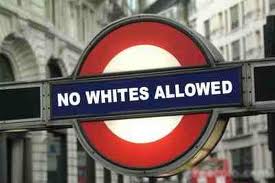
Overt Racism is the New Black

Pun Intended.

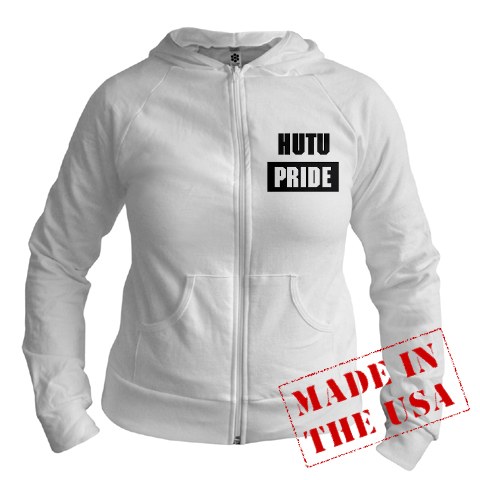
So apparently white people ain’t foolin’ around no more. White people be pissed off and they don’t care whether the facts support their rage or how straight up stupid, evil and nineteenth century they sound when they open their mouths. Shit’s gettin’ real out there in the suburbs ya’ll. The Ford Explorers are gassed up and the sequined American flag sweatshirts are ON. White America is in revolt. They are standing up for their God-given right to be the HBsIC and brown and black people better get out da way…NOW.

The near future...as delusional people see it.

Recently, CNN posted a story that released some startling data about that rare and vulnerable animal: The American White Person.

Apparently 44% of American White People think they face racial animus that is just as or more severe of a problem as the animus faced by black people or other minorities. 56% of  white Republicans and 61% white Tea Partiers share that opinion.  Colleges are beginning to offer “Whiteness Studies” courses (because all those European and American history and literature courses really gave white people the short shrift) and there is a rise in scholarships exclusively offered to that rarest of college students: the White Male. Prominent white activists are even leading marches on Washington to reclaim their right to own everything, live where ever they want, be the standard of beauty and  be the only flesh color crayon in the crayon box. Times are tough and the movement is on the streets!

Things White People Are Scared Of

This trauma is something that brown and black people could never understand. We’ve never been in power, so we can’t imagine what it must be like to see black people taking our jobs ( Yeah Mr. President, that means you), stealing our women (Taye Diggs couldn’t you find a sista to rub your gorgeousness on?) and men (Heidi Klum, bitch don’t pretend I’m not looking at you). Not to mention that brown and black people have the temerity to reproduce at a rate that is kicking white people’s birth control using ass (my great grandma had thirteen kids and all their kids have all been prolific breeders- pretty sure we could double the population of Wyoming if we so chose. Watch out Wyoming! ).

So, given all that, I’m pretty sure what I’m about to say should get me registered with the Southern Poverty Law Center for committing a hate crime against a vulnerable minority group.

Oh well, let the Haterade fall!

In the last couple months, the Governor of Mississippi Haley Barbour, has been fighting the good fight for White America. He’s belittled the trauma of the civil rights movements and defended “citizens councils” in the South. It shows how committed white people are to this  movement that this guy is STILL in the running for the Republican nomination for President. I’ll say this about White America, they do a good job of promoting from within. And let’s be honest, he deserves that promotion. I know Nazi comparisons are persona non grata but in all seriousness the White Citizens Councils of the South were the closest this country has ever come to the S.S. and it was really, really close. They killed, raped and pillaged the black community with impunity and did a masterful job covering it all up for decades. But, according to Barbour, they were the “good” guys in the civil rights movement. Ok, and my ass isn’t a work of art that I carved with thousands of lunges and carb deprivation.


Not to be out done Governor Paul LePage of Maine (whose picture you will see if you look up Good Ol’ Boy in the dictionary) informed the local chapter of the NAACP that they should “kiss his butt,” for having the temerity to question his decision to blow off Martin Luther King Jr. day celebrations. Sounds like this guy is channeling the supernatural to distinguish himself from the pack of average, ho hum, white racist dudes. Perhaps he was channeling the late, infamous Governor Faubus of Arkansas? The WHITE frosting on top of this WHITE cupcake? The man also thinks that women growing beards (not to mention tumors) as a result of exposure to BPAs is also no big thang.

I believe that for every ten actual racists, there are two people who are just too dumb or mentally imbalanced to understand the meaning behind the adjectives, nouns and verbs they string together in front of a microphone. GLoM may just be one of those individuals.


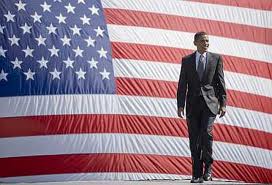
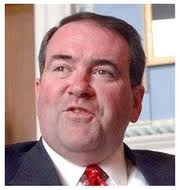
Moving right along, on the Stupid Things Governor and Former Governors Say Express, we have another southerner acting the fool. Former Governor Mike Huckabee (who lately is giving Governor Christie of New Jersey a run for his lunch money for the illustrious title of Governor Sandwiches) decided that President Obama, who was raised in Kansas and Hawaii, was influenced by madrassas as a child. Because there were so many schools that teach a “fundamental” extremist interpretation of Islam in Kansas and Hawaii in the sixties and seventies. Of course, because the President’s absentee father happened to be from a mostly Muslim country and the President has a name other than George, Bill, or James he MUST have been influenced by a world view that this country did not even regard as a threat until the man was an adult and employed by the state of Illinois.

President George W. Bush spent a lot more time hanging out in the Middle East and entertaining Middle Eastern visitors than President Obama and yet no one has a word to say about his influences. Possibly because most of us recognize that the man is too damn dumb to be capable of absorbing information from sources that don’t come with illustrations.

But I digress.

My last little example to support my reasons for building a bunker and starting my own little Black Panthers chapter, is the fine  state of Texas (isn’t it always Texas?). I may look black on the streets, but I’m a Mexican in the kitchen (and you know, genetically) and as a Mexican I want to fly down to that state and smack state Rep. Debbie Riddle upside her, “let’s find a convenient loop hole around the thirteenth amendment so I can keep my gardener and maid, treat them like shit and possibly not pay them” head. Rep. Riddle would like to criminalize the hiring of illegal immigrants, punishable with jail time, UNLESS those immigrants are employed as household staff. Immigration debate aside (and trust, that issue is chock full of plenty of awful all by itself), this would (once again in the Eternal Return of the Same that perfectly encapsulates the current state of American political discourse) create an underclass of brown people who are open to exploitation, abuse and whatever special hell lurks around the corner for people who are completely dependent upon employers for their financial, social and legal welfare.

The things Americans are proud of...

Despite the incredible disconnects from reality that make each of these incidents individually, darkly hilarious, this trend is actually a fairly terrifying. If you study ethnic conflicts, the first step to conflict (and by “conflict” I mean wholesale slaughter and imprisonment of minority groups) is the dominate racial or ethnic group starting and sustaining a victim narrative that they use as impetus to pass laws that protect their privileges at the expense of the basic rights of minority groups. We’ve seen this in New York, where mostly white people sought to deny Muslim people their right to have a community center in order to protect their privilege to not have to be confronted with people practicing a religion that they find somehow distasteful.

Chris Rock tells a story about moving into his wealthy suburb in New Jersey. There are only four black people who own homes in his neighborhood, Mary J. Blige, Jay-Z, Eddie Murphy and Rock himself. Two of the best stand-up comics in the game today, one of the greatest R&B singers ever and a hip hop mogul. Who is Rock’s next door neighbor? A white dentist. Rock’s point? “Black people (and all non-white people) have to fly to get someplace that white people can walk to.”

It is troubling that, in 2011, 44% of White Americans either can’t or don’t see this.

This is your racism trend report for March 2011.

Gotta go refill my glass of Hate Hate Juice.

Peace. Love and WHITE chocolate chip cookies.

At least they are upfront about it.


African Lions On The Verge Of Extinction

With this week’s announcement that the Eastern Cougar is now extinct we need to protect the big cats that we still have left, while there is still time.

According to the Humane Society of the United States:

Threats to the African lion, such as trophy hunting and commercial trade, have resulted in a rapid decline of nearly 50 percent over the past three decades. There are fewer than 40,000 African lions in the wild — some scientists estimate as few as 23,000. And of the remaining populations, two-thirds are neither protected nor viable over the long run.

The African lion is headed for extinction. Its wild population has dwindled by almost fifty percent in only the last three decades. Action must be taken now to save this iconic species. We have collaborated with other organizations to submit a petition to list the African lion as endangered under the Endangered Species Act (ESA).

Even as lion populations plummet, lion trophy imports to the United States are on the rise. An ESA listing would prohibit lion trophy imports to the U.S. unless it serves a conservation purpose, and would raise global awareness about the need to protect lions from this and other threats. We must reverse the decline of the African lion and our petition demonstrates that listing them as endangered under the ESA would help to do just that.

Today, The HSUS and a coalition of wildlife protection and conservation organizations filed a petition with the Secretary of the Interior to list the African lion as an endangered subspecies. You can help by signing on to our letter of support.

PLEASE TAKE ACTION:

Please click the link below to fill out and submit a form to add your name to this letter of support for the Humane Society’s petition. They will deliver the letter to Secretary of the Interior, Ken Salazar, when the public comment period officially opens. Thank you.

Humane Society


Westboro Wins: A Look At The Supreme Court’s Decision

As previously reported, the Supreme Court decided Wednesday in favor of dismissing the monetary judgement against the Westboro Baptist Church. This piece is light on commentary and heavy on explanation, though, so it could be considered a complete failure. My hopes in writing this is to give some more specifics about the Court’s reasoning so as to encourage a good conversation about the decision.

What Happened?

In an 8-1 decision, the Supreme Court found that the hate speech near military funerals that lifted the Westboro Baptist Church into infamy is protected by the First Amendment. “As a nation we have chosen a different course – to protect even hurtful speech on public issues to ensure that we do not stifle public debate,” Roberts wrote in his opinion for the Court. He was joined by Breyer, Kagan, Sotomayor, Thomas, Scalia, Kennedy, and Ginsburg, with Breyer writing a concurring opinion. Alito was the only dissenter.

For those not familiar with the case: U.S. Marine Lance Corporal Matthew Snyder was killed in an accident in Iraq, and the Westboro Baptist Church picketed Matthew’s funeral with signs including the following: “America is doomed,” “You’re going to hell,” “God hates you,” “Fag troops,” “Semper fi fags” and “Thank God for dead soldiers.” Later, WBC posted on their website that Matthew’s death was because of how he was raised by his parents (as a Catholic), and that they taught him to defy God and raised him to be “for the devil.”  Matthew’s father sued Fred Phelps, the leader of WBC, two of Phelps’s daughters, and the church itself (collectively). In a jury trial, WBC was held liable for intrusion upon seclusion, intentional infliction of emotional distress, and civil conspiracy. Mr. Snyder was awarded $5 million.

The Phelps crew appealed, and the lower court verdict was overturned by the Fourth Circuit Court of Appeals. Mr. Snyder appealed to the Supreme Court, where the case came down to these issues: whether previous SCOTUS First Amendment decisions prohibiting the awarding of damages to public figures for the intentional infliction of emotional distress applies to this case (an issue that focuses on private parties/matters v. public parties/matters), and whether an individual attending a family member’s funeral constitutes a “captive audience” who is entitled to state protection from unwanted communication. The Court decided WBC’s favor on both questions.

Matters of Public Concern and Intentional Infliction of Emotional Distress

The Court was mostly concerned with the issue of “matters of public concern,” which the Court hasn’t really narrowly defined; however, the general rule is that speech is of public concern when it is of general interest, value and concern to the public, or when it’s “fairly considered” to be related to things concerning the community (including political and social matters). The fact that the speech is controversial or hurtful has no bearing on whether it is about matters of public concern. Looking at the content, context, and form of the speech, the Court determined that the speech was public, not private, in nature.

I thought this was a particularly interesting area of discussion, because the argument against this being of public concern was that some of the signs were specifically about Mr. Snyder’s son. However, Roberts wrote that just because some of the placards were related to a particular individual, the general and dominant theme of the demonstrations were about matters of concern; the placards addressed issues of public concern,  and Westboro was expressing its views on these matters. None of the placards were about Matthew, specifically, even though the context of picketing near his funeral made the placards appear to be more targeted at him at the time.

There was also a reasonable time, place and manner issue at play here, because the Court recognized that even protected speech is not granted the same degree of permissibility at all places and times. Unfortunately for Snyder, there was no law in effect that prohibited funeral picketing (and any law of that nature has to be content-neutral). The WBC protesters contacted the police prior to the demonstration, complied with police guidelines regarding where they could picket, and they were not unruly while demonstrating. The demonstration was held 1,000 feet from the church, under police supervision.

Now, one might argue that even using protected speech can be used to cause the intentional infliction of emotional distress (IIED), but the Court said that a jury cannot decided that the “outrageousness” of the picketing (‘outrageous’ being necessary for the state’s IIED law) overrides the special protections granted to speech on matters of public concern. If the picketing had disrupted the funeral, the outcome could have been different, but it was clear that the message, and not the protest itself, was the cause of the emotional distress. Furthermore, finding the WBC’s actions to be “outrageous” here is problematic. It’s clearly a subjective issue that the jury decides based on their own views, so when applying this standard to speech, there is a danger of using IIED to suppress expression that people might find abhorrent and disturbing. It comes down to a greater good principle: “in public debate [we] must tolerate insulting, and even outrageous, speech in order to provide adequate ‘breathing space’ to the freedoms protected by the First Amendment.” Thus, the Court dismissed the verdict for Mr. Snyder on IIED.

Intrusion Upon Seclusion, Civil Conspiracy, and Captive Audience

While the Fourth Circuit didn’t weigh the other two charges independently of IIED, the Supreme Court took the opportunity to do so. Mr. Snyder argues that even if the Phelpses were protected by the First Amendment, they were not protected from liability for intrusion upon seclusion because Mr. Snyder was a captive audience at Matthew’s funeral. The idea behind the captive audience doctrine is that, generally, the Constitution does not permit the government to decide what kinds of speech require protection for the unwilling listener or viewer–people who don’t want to see or hear things they find offensive have the burden of avoiding those things. The government can get involved if there is enough evidence that “substantial privacy interests are being invaded and in an essentially intolerable manner.” Examples of when SCOTUS has applied this doctrine include a case about a statute allowing a homeowner to restrict offensive mail from being delivered to his home, and a case involving an ordinance that prohibited picketing in front of or ‘about’ a person’s residence.

Here, the Court said found that WBC was “well away” from the funeral service. Mr. Snyder said that he could see just the tops of the placards when he was en route to the funeral, and there was no other indication that the picketing disrupted the actual service. Therefore, the captive audience doctrine does not apply, and the Court set aside the verdict on intrusion upon seclusion. Since the First Amendment protected WBC from not only IIED and intrusion upon seclusion in this matter, there is no basis for the claim of civil conspiracy, as the conspiracy relied upon the allegedly unlawful nature of WBC’s activity.

What This Means

Roberts stressed that this holding is narrow. First Amendment cases are very fact-dependent and complex, so the Court tries to tread delicately when reviewing them. Roberts agrees that WBC’s picketing is hurtful, and that it does not substantially contribute to the public discourse, but since WBC addressed matters of public import, did so on public property, carried out their protests in a peaceful manner that fully complies with the guidance of officials, and didn’t actually disrupt the funeral service, WBC’s speech in this matter is protected by the First Amendment.

The narrowness of this decision is extremely important here. I believe it is the totality of the situation that led to this outcome, which means that the decision could prove to be difficult to applied outward. Justice Breyer, in his written concurrence, pointed out that upholding the application of these tort laws in this circumstances would punish WBC for communicating its viewpoints on matters of public concern “without proportionately advancing the State’s interest in protecting its citizens against severe emotional harm.”

Problems With The Decision?

Justice Alito basically thinks the majority is nuts. He feels that WBC mixed protected speech with unprotected speech (specifically focusing on what was posted on WBC’s website that was specific to Matthew and his parents) and that the decision should have dealt with the two pieces separately, as often occurs in cases involved defamatory statements mixed with nondefamatory statements. Alito feels that WBC’s motivations–“to increase publicity for its views”–did not bring their attacks upon a public figure into contributory statements to a debate on matters of public concern.

Alito also feels that the public location argument is lacking, although I have to disagree with his reasoning on this one. “A physical assault may occur without trespassing; it is no defense that the perpetrator had “the right to be where [he was],” Alito wrote, and I think this analogy is unsuitable. The argument regarding the public location is not a standalone argument–it was combined with proximity. His analogy is inept because a physical assault requires a certain degree of proximity, whether it be to the assailant’s body or to the weapon used. It was established that Mr. Snyder was not able to see or hear anything that WBC was expressing at their location at the time of the service, so Mr. Snyder was not ‘assaulted’ by their speech; likewise, using Alito’s analogy, if person A were to angrily throw a baseball bat in person B’s general direction, and person B was significantly outside the range of impact, person A cannot be charged with the assault. Attempted assault, perhaps, but I do not believe attempted infliction of emotional distress actually exists (I could be wrong, though). The argument Alito appears to be making is that impact is impact, and verbal assaults on the conduct or character of Matthew should be treated like a physical assault when it comes to this matter. However, this circles back to the problem of finding sufficient evidence that the placards at the scene were specifically about Snyder. Since WBC uses those signs for pretty much every protest they stage, it’s a tough sell.

Alito stresses the importance of recognizing the special nature of funerals. He feels that IIED should cover this situation largely because of the significant impact and harm these actions caused, and could cause in the future, to the friends and family of the deceased. “Allowing family members to have a few hours of peace without harassment does not undermine public debate,” Alito wrote. “I would therefore hold that, in this setting,the First Amendment permits a private figure to recover for the intentional infliction of emotional distress caused by speech on a matter of private concern.”

The rest of his dissent addresses issues that were covered by the Fourth Circuit but not discussed by the majority’s decision. His discussion on those issues, along with the rest of the decision, can be found here.

What I Think

Personally, I’m torn. I am mostly in agreement with the majority, though I think perhaps it would be wise for states to make it much more difficult for people to picket near funerals. My biggest issue concerns the website entry, which, if not considered defamation, could and should be covered by IIED, I think. Alito discusses this in the part of his dissent I didn’t detail, but essentially the Fourth Circuit relied upon a couple of prior SCOTUS decisions, and I think perhaps they were not used appropriately. Specifically, the famous Hustler Magazine v. Falwell case, which involved claims of IIED and defamation. A number of differences were at play in the Hustler case, including Falwell being a public figure and the nature of the publication (a caricature, in this situation). The Court found that IIED could not be used to protect a public figure from hurtful speech, basically, because this would have a severe impact on satirists and the like, who often use embarrassing situations, certain “unfortunate physical traits,” etc. to discuss or criticize public figures. The Court felt that the falseness of the hurtful speech could not be separated from the IIED claim for public speakers because of these reason.

The Hustler decision, however, did not extend to private figures, and that’s the rub. Should it matter whether or not the statements made by WBC regarding Matthew and his parents can be proven to be false? The statements made cannot be proven either way because they are surrounded by the shroud of mystery that accompanies religion. Am I allowed to put up posters saying “God knows Person X is a rapist”? And why should the falseness of the statements matter, in terms of IIED? If I were to expose personal secrets of Person X in a highly public manner with the intention to inflict emotional distress, should Person X not be protected by that tort law? Justice Breyer, in his concurrence, does not believe that to be the case–that is, he thinks this decision does not preclude Person X from being protected. Then why is ‘demonstrably false’ an issue, and why should hyperbole matter when dealing with private figures? Honestly, I don’t know that the Court sufficiently dealt with this issue.

Wrapping Things Up

Westboro Baptist Church survives to see another day of hateful picketing and disgusting rhetoric. They probably see this as God’s way of letting them know they working on his behalf. I do have to say, though, that Fred Phelps is no fool: the single most powerful thing these guys have going for them is that they know the law, and they utilize this knowledge accordingly. They comply with all local laws regarding picketing and assembly. They notify local law enforcement. They are peaceful and nonviolent. They walk right up to the line and they set-up camp. I don’t remember how many lawyers are in the family, but here’s an idea of how well they know the law: one of their own, Margie Phelps, her family’s case in front of the Supreme Court.

Perhaps the lesson we could all learn from this is to start ignoring these people. They thrive off the attention they get. It validates them. It gives them the drive to do more. Counter-protests may work, depending on how they are done (nonsensical protests that drown them out/distract from them or protests that raise money to support the causes that WBC hates are a couple of examples that might have been effective, if I recall correctly), but the more people get angry at them for being so awful, the more they seem to appear. I knew about WBC a number of years ago, and there were never this prevalent (at least, I don’t remember them being anywhere near as well-known). I feel like not only has their coverage been increased, but also their appearances. Perhaps that’s just a perception issue, and I’m totally wrong, but since they are typically protected by the law, I think that it might be time to just try to snuff them out with silence–our silence.

I want to end this by saying that this was my takeaway from what I read of the decision. If there are any mistakes, please let me know and I will fix them. And if I’m totally off on my legal analysis in any way, please do let me know and I’ll try to either correct or clarify.

UPDATE: After this incident with Matthew’s funeral, Maryland passed a law requiring picketers to stay at least 100 feet away from a funeral or funeral precession. This law is content-neutral. However, in light of the Supreme Court’s decision on Wednesday, WBC plans to challenge this (and other) anti-picketing laws. I think the Phelps family might have a harder time with this case, and it’s probably more of a publicity stunt than anything else. Still, if they’d like to waste their money on it, that’s their prerogative.

Cats, Cheese Biscuits, Kittens and Bunnies

Cats, Cheese Biscuits, Kittens and Bunnies: Which do Crasstalk commenters love more?


Cats are mysterious and independent. Did you know that in Indonesia, cats are thought to control the rain?


Cheese biscuits are yummy and delicious. They’re almost as yummy as frozen pumpkin pie bought in bulk and on sale.


There’s really nothing cuter than a kitten. Just look at that cute little face and those innocent eyes.


Bunnies are also cute, cuddly and adorable… except for the fact that they breed like rabbits, of course.  And that one killer bunny from Monty Python.


So, Crasstalkers, please tell us in the comments: which do you prefer; cats, cheese biscuits, kittens, bunnies or evil hags.

Fun With Politics: Nepotism Edition

Note: This article was put together by Lady_E for your reading pleasure. Show some appreciation.

Of the many themes emerging from the uprisings sweeping the Middle East, one of the most resonant and motivating have been complaints of nepotism. Before pledging to hold elections, lift onerous security laws or stop police brutality, dictator after dictator has rushed to state TV to pledge, first and foremost, that they will not foist their worthless, generally reviled and invariably criminal son onto their beleaguered country. “No, no! I was never going to do that! I promise!” they swear in a desperate attempt to appease their outraged populations. In fact, many commentators have suggested that the final straw in Egypt was the widespread belief that Hosni Mubarak was going to install his hated son, Gamel, as President in the next elections. Not surprisingly, the very first response to the protests from Mubarak was to promise that neither he nor his son would be a candidate in the elections.

This phenomenon is completely understandable. After all, nothing gets people’s hackles up like seeing some entitled douchebag sail through life smugly collecting that Ivy League degree, high paying job or important post without any acknowledgement of how underserved each of these things are. If there is one thing that unites people it is disdain for blatant nepotism and this is true the world over, from the streets of Cairo to the halls of Princeton.

So, in recognition of this powerfully unifying topic, you are all invited to submit your most outrageous example of nepotism. The rules for submission are simple. The parent doesn’t need to be a dad (how’s the autobiography going, Bristol?), nor do they have to be a dictator. But, the child must be completely unworthy of said advantages and privileges obtained by their accident of birth. After all, not all nepotism is bad. As my boyfriend points out, when the all-knowing and all-powerful God needed a job done, he did not pull out the angel org chart or call for candidates. He sent his son.

Choosing one will be difficult, I admit. To start you all off I will make my nomination for the most outrageous, undeserved on the merits and due wholly to his daddy example of nepotism. After much review and careful consideration, I submit to you Mr. Saadi Gaddafi, son of Moamar. As recounted in this excellent New York Times article, papa Gaddafi succeeded in securing for his son, Saadi, what I think is a truly remarkable feat of nepotistic influence- a spot on one of Italy’s most successful Series A soccer teams.

From the article:


Fiat is the owner of Italy’s oldest and most successful team, and the team with the most fans — Juventus. The Qaddafi family built up considerable holdings in Juventus, obtaining, according to some reports as much as seven percent of shares in the clubs in recent years. In 2002, the Italian Supercup final was played in Tripoli, the currently embattled Libyan capital, thanks to these links.

It is perhaps for this reason that Saadi Qaddafi thought that he might be able to play in Serie A, despite not being good enough. The strategy was simple — pay teams to have him in their squad, and train with the first team. He might even get a few minutes on the field, on rare occasions.

Saadi was “signed” by Luciano Gaucci, the volcanic owner of Perugia, in the 2003 off-season. Qaddafi had been hanging around Italian soccer for years. He even trained with Paul Gascoigne at Lazio in the 1990s. Although he had trained with Juve, nobody had ever imagined that the dictator’s son was anywhere near good enough to actually turn out in Serie A, except Gaucci.

Despite Gaucci’s best efforts, Perugia Manager Serse Cosmi obstinately refused to play the 30-year-old Libyan. Gaucci issued a statement, at the time, which is interesting in retrospect: “Berlusconi called me up and encouraged me. He told me that having Qaddafi in the team is helping us build a relationship with Libya. If he plays badly, he plays badly. So be it.”

A number of excuses were invented — he was injured, it was the wrong game. Gaucci pleaded publicly with Cosmi, asking if he would play Qaddafi for just one half … even if he is not very good. Cosmi held firm. Qaddafi sat on the bench once without coming on. The case was resolved in a spectacular manner. On the Oct. 5, 2003 (after his first game as nonplaying substitute) Qaddafi’s urine sample was found to contain traces of an illegal substance — Nandrolone. He was barred for three months, without ever having played for the first team.

The Qaddafi saga was not over, however.

Having served his ban, Saadi finally saw some action, for 15 minutes, in a key relegation game against Juventus in May as Perugia won, 1-0. A week later an attack of appendicitis conveniently put him out for the rest of the season.

Can you beat that? Submit your choice in the comments!

Anatomy of a Divorce: The Beginning

It’s my oldest memory.  I was three.  It was 2 o’clock in the morning.  The knock on the front door would not stop.  It was getting louder and louder.  I buried my head under my pillow, but my father’s angry voice overcame everything.  Everything, until the neighbors called the police.  “He is no longer welcome in this house.  I changed the locks and my mind” my mother told the officers.  This was Europe in 1973 and the cops attempted to reason with her, but it was no use.  You see, my dad had spent 17 years pushing my mother to the breaking point and had finally, and spectacularly, succeeded.  He wanted to be let in, to come home, to be forgiven.  My mom had different ideas.  Ideas of freedom, escape, and a new beginning that, in no way, involved “him”.

He was a Cheater.  In my world, this term should always be capitalized.  It changed my life, my relationships, and my view of marriage and should never be taken lightly.

My parents met in New York City, through a friend, and became inseparable. They married and moved to a beautiful loft on Washington Square in the heart of NYC.  My mother played the happy homemaker and encouraged my father to indulge in his photographic talent as a career. He was a cartographer by trade, but taking pictures was his passion.  He was incredible by all accounts, but NY was overrun with talent and my Dad languished while trying to build his portfolio.
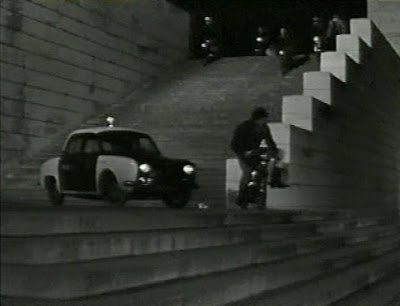
His knack for commercial photography finally reached a friend, who was living a fabulous bohemian life in 1960’s Germany.  He invited my Parents to make the move to Europe, set up studio space, and find a rep to help my father “sell” his talent.

From the get-go, my Mom was anything but excited about this adventure.  “Germany, really?  What the hell am I going to do with myself?”.  But, she loved my father and was willing to do anything to make him happy.  And, in the beginning, he was happy.  His work was well received.  He managed to garner several large commercial contracts with The European Cotton Council, MCM Leather, and Braun, among others.  Most of this was, in no small part, due to his rep, who worked tirelessly to sell my Father’s talent.  Unfortunately for us, she had an ulterior motive… Him.

Their affair began quietly.  My mom is not sure exactly when, but it was somewhere around the time that I was conceived.  The pregnancy was a long time in coming and had been taxing on their relationship, to say the least. Birth control had torn apart my mother’s reproductive organs (wrong dosage) to the extent that my imminent arrival was quite the surprise to the doctors and my parents. The timing could not have been worse, but my mom was thrilled nonetheless. She dove, head first, into motherhood. To the outside world, she had the perfect life. A successful husband, beautiful home, and a miracle baby on the way. No one knew that it was all a facade.

She knew from the very beginning. He showed all the stereotypical signs; coming home at odd hours, distant, argumentative, defensive. My father was the poster boy for cheating. Yet, my mother chose to ignore it all. To this day, she tells me “it was the 1970’s in Europe. Everyone was having affairs. It’s just something you dealt with”. But, she didn’t just deal with it. The mistress/rep was invited into our home for birthday parties and holiday dinners. Her daughter and I were playmates. She was sleeping with my father while my mother babysat. The whole charade was destined to explode and leave two innocent girls in the dust. It was just a matter of time…

My mom won’t tell me what/who cracked her perfect smile, but I am grateful for that instance. The instance she decided that this was no way to live, no way to raise a child. The instance she began to respect herself, her daughter and realize that there was more to this life than taking care of my father while he gallivanted around town like the rooster that ran the hen house. She did not drag on the misery. Her decision was quick and final, almost too practical and calculated.

The story of the actual divorce and its aftermath will need to wait for another day. But, trust me when I tell you, it included late night car chases across Europe, private detectives and a final move back to the States with everything we owned. For this, and many other things, I am proud of my mother. You see, I am a child of divorce and I am a better person for it. In no way do I believe my parents should have stayed together “for the sake of the child”. It was a struggle, almost on a daily basis but, my Mom did it. She succeeded without my father and never looked back…..

In Defense Of The First Amendment

Our wonderful colleague Salome Valentine, hot on the heels of this week’s ruling in Snyder v. Phelps (holding WBC’s picketing of a military funeral to be Constitutionally-protected speech), highlighted an earlier decision by this Court dealing with a similar issue.  As correctly noted by her, in US v. Stevens, the Supreme Court struck down a 1999 law that outlawed “crush videos” – despicable videos that show the torment and death of animals whereby a (typically small) animal is crushed by a woman, done for the sexual (masturbatory) gratification.  I do not understand this fetish.  Few do and it appears to fall so far outside the bounds of ordinary human decency – and even depravity – that few are willing to discuss it in depth or at length.

Nevertheless, the Supreme Court struck down a law that outlawed these videos, seeming to put the imprimatur of permissibility out conduct that falls well beyond the pale.  This is not true.  In fact, what Chief Justice John Roberts’ opinions in both Stevens and Snyder show is a deep abiding devotion to the letter and spirit of the First Amendment.  This devotion is apparent in the plain-spoken and highly accessible manner in which Justice Roberts wrote his opinions.

I have excerpted the notable and relevant portions of Roberts’ opinions.  Once you read them, I hope you will see that, at least when it comes to the First Amendment, John Roberts is a needed bulwark against the likes of Samuel Alito.  Where you see quotes, that is Justice Roberts citing to a prior case. I have omitted the cited case names and citations for brevity’s sake because Justice Roberts does, in fact, hew close to prior rulings:

Whether the First Amendment prohibits holding Westboro liable for its speech in this case turns largely  on whether that speech is of public or private concern, as determined by all the circumstances of the case. “[S]peech on ‘matters of public concern’ . . . is ‘at the  heart of the First Amendment’s protection.’” The First Amendment reflects “a profound national commitment to the principle that debate on public issues should be uninhibited, robust, and wide-open.”  That is because “speech concerning public affairs is more than self-expression; it is the essence of self-government.” Accordingly, “speech on public issues occupies the highest rung  of the hierarchy of First Amendment values, and is entitled to special protection.”

The “content” of Westboro’s signs plainly relates to broad issues of interest to society at large, rather than matters of  “purely private concern.” While these messages may  fall short  of refined social or political commentary, the issues they highlight—the political and moral conduct of the United States and its citizens, the fate of our Nation, homosexuality in the  military, and scandals involving the Catholic clergy—are matters of public import.  The signs certainly convey Westboro’s position on those issues,  in a manner designed… to reach as broad a public audience as possible.  And even if a few of  the signs—such as “You’re Going  to Hell” and “God  Hates You”—were viewed as containing messages related to Matthew Snyder or the Snyders specifically, that would not change the fact that the overall thrust and dominant theme of Westboro’s demonstration spoke to broader public issues.

Westboro had been actively engaged in speaking on the subjects addressed in its picketing long before it became aware of Matthew Snyder, and there can be no serious claim that Westboro’s picketing did not represent its “honestly believed” views on public issues. There was no preexisting relationship or conflict  between Westboro and Snyder that might suggest Westboro’s speech on public matters was intended to mask an attack on Snyder over a private matter.

Westboro conducted its picketing peacefully on matters of public concern at a public place adjacent to a public street.  Such space occupies a “special position in terms of First Amendment protection.” “[W]e have repeatedly referred to public streets as the archetype of a traditional public forum,” noting that “ ‘[t]ime out of mind’ public streets and sidewalks have been used for public assembly and debate.”

That said,  “[e]ven protected speech is not equally permissible in all places and at all times.” Westboro’s choice of where and when to conduct its picketing is not beyond the Government’s regulatory reach—it is “subject to reasonable time, place, or manner restrictions” that are consistent with the standards announced in this Court’s precedents.

Maryland’s law, however, was not  in effect at the time of the events at issue here,  so we have no occasion to consider how it might apply to facts such as those before us, or whether it or other similar regulations are constitutional.

Simply put, the church members had the right to be where they were.  Westboro alerted local authorities to its funeral protest and fully complied with police guidance on where the picketing could be staged.   The picketing was conducted  under police supervision some 1,000 feet from the church, out of the sight of those at the church.   The protest was not unruly; there was no shouting, profanity, or violence.

The record confirms that any  distress occasioned by Westboro’s picketing turned on the content and viewpointof the message conveyed, rather than any interference with the funeral itself.   A  group of parishioners standing at the very spot where Westboro stood, holding signs that said “God Bless America” and “God Loves You,” would not have been subjected to liability. It was  what Westboro said that exposed it to tort damages.

Given that Westboro’s speech was at a public place on a matter of public concern, that speech is entitled to “special protection” under the First Amendment.  Such speech cannot be restricted simply because it is upsetting or arouses contempt.  “If there is a bedrock principle underlying the First Amendment, it is that the government may not prohibit the expression of an idea simply because society finds the idea itself offensive or disagreeable.” Indeed, “the point of all speech protection is to shield just those choices of content that in someone’s eyes are misguided, or even hurtful.”

“in public debate [we] must tolerate insulting, and even outrageous, speech in order to provide adequate ‘breathing space’ to the freedoms protected by the First Amendment.”

What Westboro said, in the whole context of how and where it chose to say it, is entitled to “special protection” under the First Amendment, and that protection cannot be overcome by a jury finding that the picketing was outrageous. For all these reasons, the jury  verdict imposing tort liability on Westboro for intentional infliction of emotional distress must be set aside.

In most circumstances, “the Constitution does not permit the government to decide which types of otherwise protected speech are  sufficiently offensive to require protection for the unwilling listener or  viewer. Rather, . . . the burden normally falls upon  the viewer  to avoid further bombardment of [his] sensibilities simply by averting [his] eyes.”

As a general matter, we have applied the captive audience doctrine only sparingly to protect unwilling listeners from protected speech.  For  example, we have upheld  a statute allowing a homeowner to restrict the delivery of offensive mail to his home and an ordinance prohibiting picketing “before or about” any individual’s residence.

Here, Westboro stayed well away from the  memorial service.  Snyder could see no more than the tops of the signs when driving to the funeral.  And there is no indication that the picketing in any  way interfered with the funeral service itself.  We decline to expand the captive audience doctrine to the circumstances presented here. Because we find that the First Amendment bars Snyder from recovery for intentional infliction of emotional distress or intrusion upon seclusion—the alleged unlawful activity Westboro conspired to accomplish—we must likewise hold that Snyder cannot recover for civil conspiracy based on those torts.

Our holding today is narrow.

Westboro believes that America is morally flawed; many Americans might feel  the same about Westboro.   Westboro’s funeral picketing is certainly hurtful and its contribution to public discourse may be negligible.   But Westboro addressed matters of public import on public property, in a peaceful manner, in full compliance with the guidance of local officials.  The speech was indeed planned to coincide with Matthew Snyder’s funeral, but did not itself disrupt that funeral, and Westboro’s choice to conduct its picketing at that time and place did not alter the nature of its speech.

Speech is powerful.  It can stir people to action, move them to tears of both joy and sorrow, and—as it did here—inflict great pain.  On the facts before us, we cannot react to that pain by punishing the speaker.   As  a Nation we have chosen a different course—to protect  even hurtful speech on  public issues to  ensure that we  do not stifle public debate.  That choice requires that we shield Westboro from tort liability for its picketing in this case.

From US v. Stevens:

“From 1791 to the present,” however, the First Amendment has “permitted restrictions upon the content of speech in a few limited areas,” and has never “include[d] a freedom to disregard these traditional limitations.” These “historic and traditional categories long familiar to the bar,”  – including obscenity, defamation, fraud, incitement, and speech integral to criminal conduct —are “well-defined and narrowly limited classes of speech, the prevention and punishment of which have never been thought to raise any Constitutional problem.

The Government argues that “depictions of animal cruelty” should be added to the list. It contends that depictions of “illegal acts of animal cruelty” that are “made, sold, or possessed for commercial gain” necessarily “lack expressive value,” and may accordingly “be regulated as unprotected speech.”  The claim is not just that Congress may regulate depictions of animal cruelty subject to the First Amendment, but that these depictions are outside the reach of that Amendment altogether— that they fall into a “`First Amendment Free Zone.'”

As the Government notes, the prohibition of animal cruelty itself has a long history in American law, starting with the early settlement of the Colonies. Reply Brief 12, n. 8; see, e.g., The Body of Liberties § 92 (Mass. Bay Colony 1641) (“No man shall exercise any Tirany or Cruelty towards any bruit Creature which are usually kept for man’s use“). But we are unaware of any similar tradition excluding depictions of animal cruelty from “the freedom of speech” codified in the First Amendment, and the Government points us to none.

Instead, the Government points to Congress’s “`legislative judgment that . . . depictions of animals being intentionally tortured and killed [are] of such minimal redeeming value as to render [them] unworthy of First Amendment protection,'” and asks the Court to uphold the ban on the same basis. The Government thus proposes that a claim of categorical exclusion should be considered under a simple balancing test: “Whether a given category of speech enjoys First Amendment protection depends upon a categorical balancing of the value of the speech against its societal costs.”

As a free-floating test for First Amendment coverage, that sentence is startling and dangerous. The First Amendment’s guarantee of free speech does not extend only to categories of speech that survive an ad hoc balancing of relative social costs and benefits. The First Amendment itself reflects a judgment by the American people that the benefits of its restrictions on the Government outweigh the costs. Our Constitution forecloses any attempt to revise that judgment simply on the basis that some speech is not worth it. The Constitution is not a document “prescribing limits, and declaring that those limits may be passed at pleasure.” Marbury v. Madison, 1 Cranch 137, 178, 2 L.Ed. 60 (1803).

We read § 48 to create a criminal prohibition of alarming breadth. To begin with, the text of the statute’s ban on a “depiction of animal cruelty” nowhere requires that the depicted conduct be cruel. That text applies to “any . . . depiction” in which “a living animal is intentionally maimed, mutilated, tortured, wounded, or killed.” § 48(c)(1). “[M]aimed, mutilated, [and] tortured” convey cruelty, but “wounded” or “killed” do not suggest any such limitation.

The only thing standing between defendants who sell such depictions and five years in federal prison—other than the mercy of a prosecutor—is the statute’s exceptions clause. Subsection (b) exempts from prohibition “any depiction that has serious religious, political, scientific, educational, journalistic, historical, or artistic value.” The Government argues that this clause substantially narrows the statute’s reach: News reports about animal cruelty have “journalistic” value; pictures of bullfights in Spain have “historical” value; and instructional hunting videos have “educational” value.

Quite apart from the requirement of “serious” value in § 48(b), the excepted speech must also fall within one of the enumerated categories. Much speech does not. Most hunting videos, for example, are not obviously instructional in nature, except in the sense that all life is a lesson. According to Safari Club International and the Congressional Sportsmen’s Foundation, many popular videos “have primarily entertainment value” and are designed to “entertai[n] the viewer, marke[t] hunting equipment, or increas[e] the hunting community.” The Government offers no principled explanation why these depictions of hunting or depictions of Spanish bullfights would be inherently valuable while those of Japanese dogfights are not. The dissent contends that hunting depictions must have serious value because hunting has serious value, in a way that dogfights presumably do not. Post, at ___-___. But § 48(b) addresses the value of the depictions, not of the underlying activity. There is simply no adequate reading of the exceptions clause that results in the statute’s banning only the depictions the Government would like to ban.

This prosecution is itself evidence of the danger in putting faith in government representations of prosecutorial restraint. When this legislation was enacted, the Executive Branch announced that it would interpret § 48 as covering only depictions “of wanton cruelty to animals designed to appeal to a prurient interest in sex.” See Statement by President William J. Clinton upon Signing H.R. 1887, 34 Weekly Comp. Pres. Doc. 2557 (Dec. 9, 1999). No one suggests that the videos in this case fit that description. The Government’s assurance that it will apply § 48 far more restrictively than its language provides is pertinent only as an implicit acknowledgment of the potential constitutional problems with a more natural reading.

Again, in Stevens, Justice Alito was the lone dissent.

Does the Supreme Court love or even approve of animal cruelty or the needless infliction of emotional anguish on a grieving parent?  Not one jot.   What Justice Stevens’ opinion show is compassion and desire for a moral society in America that is governed equally before the law.

Please read these opinions if you get a chance. They are written in plain English and speak volumes to just how valuable the First Amendment is.  I find myself revisiting my prejudices towards Justice Roberts, based on him being appointed by President George W. Bush.  In reading these two cases, I am glad to see that someone of his intellect is, in fact, safeguarding the First Amendment.